








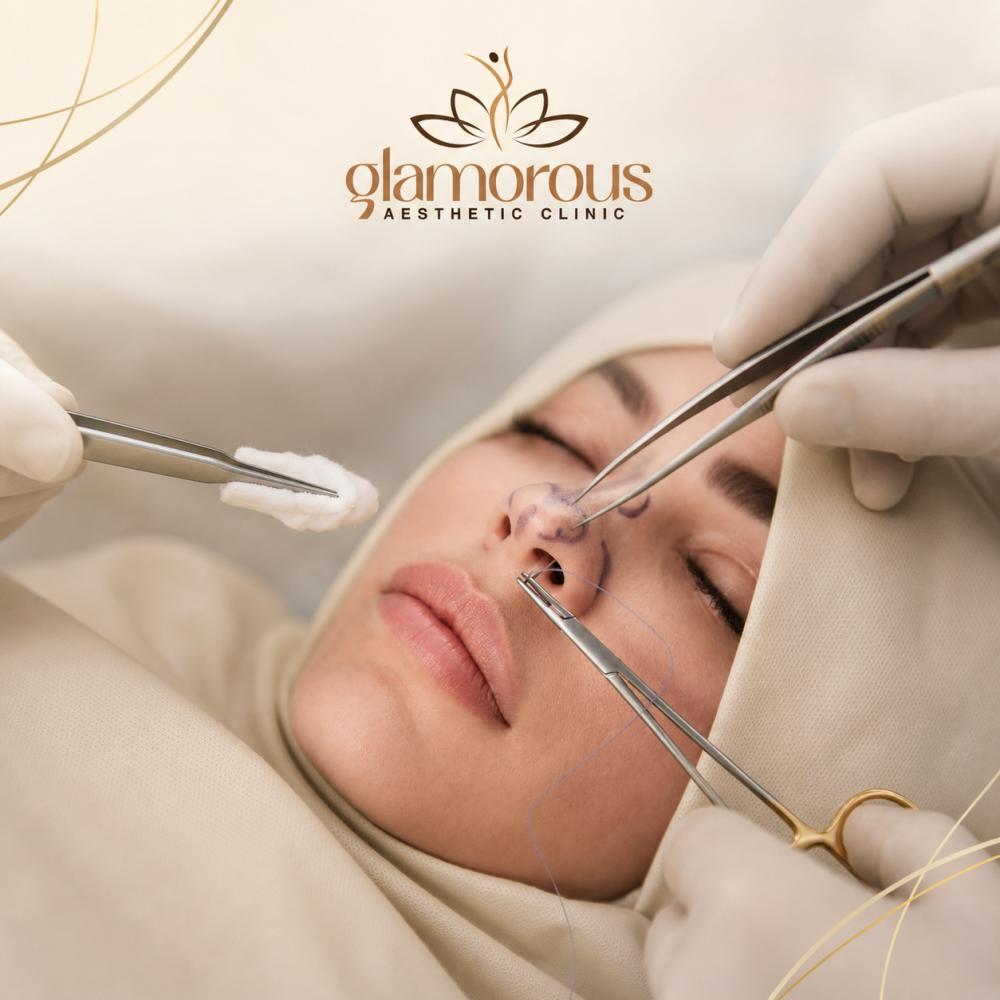
Rhinoplasty for Improved Nose-to-Chin Facial Proportion at Glamorous

Facial harmony is rarely about a single feature. The eye reads a face as a whole, and the relationship between the nose, lips, and chin often shapes first impressions more than any one part alone. A nose that is slightly too prominent, or a chin that sits slightly too far back, can disrupt this balance in ways that are hard to name but easy to feel. Many people exploring Rhinoplasty in Islamabad are surprised to learn that the best surgical plans consider the chin and profile as carefully as the nose itself. This guide explains how nose-to-chin proportion works, how rhinoplasty can improve it, and what to expect from the process.
Understanding Facial Proportion and the Profile View
Facial proportion describes how the features relate to one another in size, position, and angle. While the front view matters, the side profile reveals the relationship between nose, lips, and chin most clearly. In a balanced profile, the nose projects forward in harmony with the chin, the lips sit softly in between, and the jawline flows smoothly into the neck.Many surgeons use reference angles and measurements to guide planning, such as the angle between the nose and upper lip and the line dropped from the forehead to the chin. These are guides, not rigid rules. Ethnic background, personal features, and individual preference all shape what a natural, attractive profile looks like, and a thoughtful surgeon respects those differences rather than imposing a single template.
How the Nose and Chin Influence Each Other?
The nose and chin visually balance one another. A recessed or small chin can make a normal nose look larger and more prominent. In the same way, a strong chin can make a small nose appear underprojected. Because perception depends on the relationship rather than on each feature alone, changing one can alter how the other appears.
What Rhinoplasty Can Do for Proportion?
Rhinoplasty reshapes the bone and cartilage of the nose. Depending on the plan, it can reduce a prominent bridge, refine a bulbous or drooping tip, narrow the nasal base, adjust the angle between nose and lip, and improve symmetry. Each change affects how the nose sits relative to the chin.For example, lowering a high bridge and lifting a drooping tip can reduce the sense that the nose dominates the profile. Refining the tip can bring more elegance and definition. The aim is a nose that complements the chin and lips, not one that looks operated on.
When the Chin Needs Attention Too
Sometimes the chin is the missing piece. A recessed chin can leave the profile looking unbalanced even after an excellent nose result. In these cases, surgeons may discuss options such as a chin implant, hyaluronic acid filler for a temporary improvement, or a sliding genioplasty, which repositions the chin bone itself.Not every patient needs chin work, and an honest surgeon will say so. The decision should come from careful assessment of your profile, not from an attempt to add procedures. Some patients choose to start with the nose and then reassess the chin once swelling has settled.
Open and Closed Rhinoplasty Techniques
Two main approaches are used. In closed rhinoplasty, incisions are made inside the nostrils, leaving no visible external scar. It is often suited to smaller adjustments and may involve less swelling. In open rhinoplasty, a small additional incision is made across the columella, the strip of tissue between the nostrils, giving the surgeon wider access and precise control over complex changes.Neither is automatically better. The choice depends on the complexity of the case, your anatomy, and the surgeon’s experience. A skilled surgeon recommends the technique that best serves your goals rather than the one they prefer by habit.
Who Is a Suitable Candidate?
Good candidates are typically healthy adults whose facial growth has completed, usually around the late teens for females and a little later for males. They should have realistic expectations and a clear understanding of what surgery can achieve.Rhinoplasty may not be appropriate for people with unrealistic goals, uncontrolled medical conditions, or active nasal infections, or for those who smoke and are unwilling to stop during healing. Those with a history of cocaine use or severe nasal damage may need special evaluation. A thorough consultation determines whether surgery is safe and sensible for you.
Conclusion
Rhinoplasty can do far more than change the shape of the nose. When planned with the whole profile in mind, it can restore balance between the nose, lips, and chin and bring a sense of harmony to the face. Success depends on careful evaluation, a technique matched to your anatomy, honest discussion about whether chin work might also help, and a skilled surgeon who respects your natural features. Understand the risks, recovery, and timeline, choose a clinic that prioritizes safety and transparency, and keep your expectations realistic. With thoughtful planning and professional care, rhinoplasty can create a profile that looks natural and feels like your own.
Read More :
https://www.dropbox.com/scl/fi/47jvj61d5g1t66rz81yk1/Nose-Reshaping-Surgery-with-Personalized-Facial-Analysis-at-Glamorous.paper?rlkey=tdtchmqfvysyef9zmky0g5zmx&st=iieidxh0&dl=0


