








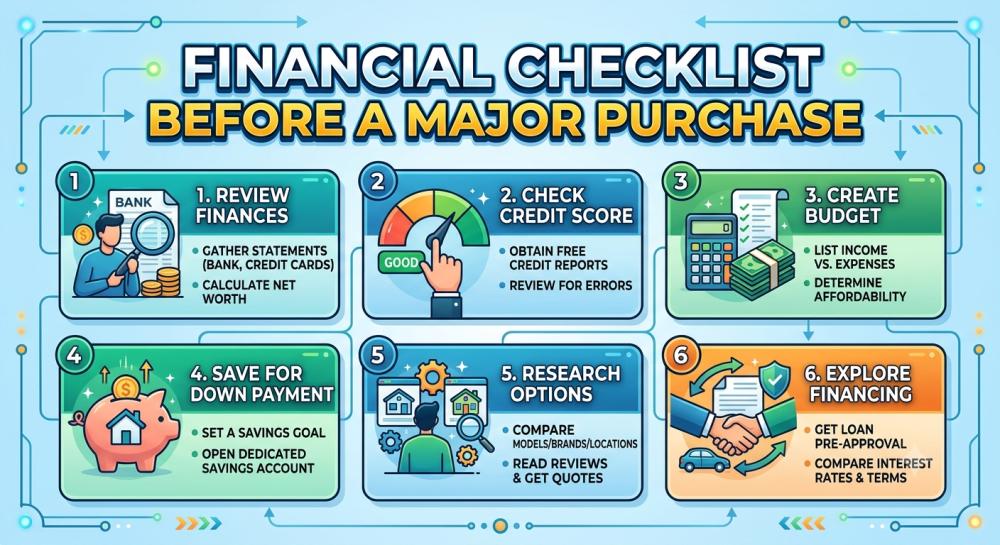
How to Prepare a Financial Checklist Before a Major Purchase

Making a major purchase is an important financial decision. Whether you are planning to buy a vehicle, upgrade household appliances, purchase furniture, or pay for a significant personal expense, careful preparation can help you avoid unnecessary financial pressure.
A purchase may seem affordable when you look only at its initial cost, but additional expenses, regular household bills, and unexpected financial needs can affect your budget. Preparing a financial checklist before spending helps you understand what you can afford, how the purchase may affect your savings, and whether borrowing is necessary.
By reviewing your finances in advance, you can make a more informed decision and protect your long-term financial stability.
1. Define the Purpose of Your Purchase
Before spending money, identify why you need the item or service. A major purchase may be essential, planned for the future, or something you want for personal convenience.
Ask yourself a few questions:
-
Is the purchase necessary right now?
-
Can I postpone it without creating a problem?
-
Is there a more affordable alternative?
-
Will this purchase improve my daily life or meet an important need?
-
Does it fit my current financial priorities?
Understanding the purpose helps you separate genuine needs from purchases influenced by temporary excitement or social pressure.
If the purchase is not urgent, consider giving yourself time to compare options and prepare your budget before making a commitment.
2. Calculate Your Total Purchase Cost
The listed price is not always the complete cost of a major purchase. Depending on what you are buying, you may need to account for installation, maintenance, delivery, accessories, insurance, or other ongoing expenses.
For example, purchasing a vehicle may involve registration, maintenance, fuel, and insurance. Buying a home appliance may involve installation, electricity consumption, and servicing.
Prepare a list of all expected costs before deciding whether the purchase is affordable.
A clear estimate helps you avoid situations where the initial payment fits your budget but the additional expenses create financial difficulty later.
3. Review Your Monthly Budget
Your financial checklist should begin with your current income and expenses. Calculate your take-home income and subtract essential household costs, existing repayments, savings contributions, and other financial commitments.
The remaining amount indicates how much flexibility you may have for a major purchase.
Include expenses such as:
-
Housing and utility bills
-
Groceries and transportation
-
Education and family responsibilities
-
Healthcare and insurance
-
Existing loan repayments
-
Emergency savings
Avoid treating your entire remaining balance as money available to spend. Keep some flexibility for unexpected costs and future obligations.
If the purchase would make it difficult to pay essential bills or maintain savings, consider delaying it or choosing a less expensive alternative.
4. Check Your Emergency Savings
Emergency savings are intended to help manage unexpected events, such as medical expenses, urgent repairs, or temporary income disruption.
Before making a major purchase, check whether you can afford it without using money reserved for emergencies.
Ideally, keep your emergency fund separate from your planned purchase budget. If buying the item would leave you without a financial cushion, reconsider the timing or explore ways to save gradually.
A purchase should not create unnecessary vulnerability if an unexpected expense arises soon afterwards.
5. Compare Products, Services, and Sellers
Do not make a decision based only on advertisements or the first option you find. Compare different products, sellers, service providers, and available features.
Review the following factors:
-
Overall cost
-
Quality and durability
-
Warranty and after-sales support
-
Maintenance requirements
-
Return or cancellation conditions
-
Customer feedback from credible sources
A lower initial cost does not always mean better value. An item that lasts longer or requires less maintenance may be more suitable over time.
Read the terms carefully before paying a deposit or signing a purchase agreement. Understand whether any advance payment is refundable and what happens if you cancel the transaction.
6. Decide How You Will Pay
Once you understand the total cost, decide how you plan to pay for the purchase. Depending on your financial position, you may use savings, pay from your current income, consider a suitable payment arrangement, or explore borrowing.
Compare the advantages and limitations of each option before committing.
Using savings may reduce future repayment obligations, but spending all your available money can leave you financially exposed. Borrowing may allow you to spread payments over time, but it introduces additional costs and responsibilities.
Choose a payment method that fits your budget and protects your ability to meet essential expenses.
7. Understand Borrowing Options Before Applying
If you cannot cover the entire purchase through available funds, you may consider a loan. However, borrowing should be evaluated carefully rather than treated as an automatic solution.
People researching an instant personal loan upto 50000 should understand that advertised loan limits and processing descriptions do not guarantee eligibility, approval, or immediate disbursement. Actual terms depend on the lender, the applicant's circumstances, and the product's requirements.
Before applying, check:
-
Eligibility criteria: Review income, employment, credit assessment, and documentation requirements.
-
Interest rate: Understand the rate applicable to your offer.
-
Total repayment: Calculate the overall amount you would need to repay.
-
Additional charges: Check processing fees and other disclosed costs.
-
Repayment schedule: Confirm that instalments fit your monthly budget.
-
Early repayment conditions: Understand whether any charges or conditions apply if you repay early.
-
Lender credibility: Verify the lender's identity and relevant regulatory status before sharing personal information.
Do not focus only on the amount you may receive. The more important question is whether you can repay the borrowing comfortably while managing your other financial responsibilities.
8. Calculate Whether the Repayments Are Affordable
Before accepting a loan offer, prepare a realistic repayment plan. List your regular income, essential expenses, existing debts, and savings commitments.
Then consider the proposed instalment and how much money would remain afterwards.
Your plan should also account for possible changes in expenses or income. For example, if household costs increase or your salary is delayed, you should still have a reasonable way to manage your obligations.
If the repayments leave very little room for essential needs, the loan may be unsuitable for your current circumstances.
Avoid taking on a longer or larger financial commitment simply to make the purchase happen sooner. Delaying the purchase or choosing a lower-cost option may be the more practical decision.
9. Consider the Long-Term Financial Impact
A major purchase can affect more than your current month's budget. It may reduce the money available for education, family needs, travel, retirement savings, or other future goals.
Think about what you may need financially over the coming months and years.
Ask yourself:
-
Will this purchase delay an important savings goal?
-
Could it increase my regular expenses?
-
Will I still be able to manage existing financial commitments?
-
Does the purchase require ongoing maintenance or other payments?
-
Would waiting improve my financial position?
This broader review helps you make a decision that supports your financial priorities instead of focusing only on the immediate benefit.
10. Read All Terms and Conditions Carefully
Before completing the transaction, review the documents associated with your purchase or financing arrangement.
For a product purchase, check warranty coverage, delivery terms, cancellation conditions, and any recurring charges. For a loan, read the agreement to understand the applicable interest rate, repayment schedule, fees, penalties, and other obligations.
Do not rely entirely on verbal explanations or promotional messages. Ask questions if any condition is unclear and keep copies of important documents.
Taking time to review the terms can help prevent misunderstandings and unexpected costs later.
11. Avoid Impulse Purchases and Financial Pressure
Sales promotions, limited-time offers, and social pressure can make a purchase feel urgent even when it is not necessary.
Before making a large payment, pause and review your checklist. If the purchase was not planned, give yourself time to consider whether it fits your current priorities.
Be cautious of advertisements that encourage you to borrow without explaining the full repayment terms. A quick application process does not automatically make a financial product suitable for your needs.
Make your decision based on your budget, the value of the purchase, and your ability to manage the resulting expenses.
12. Keep a Record of Your Purchase and Payments
After completing a major purchase, keep the invoice, warranty information, payment confirmation, and any financing documents in an organised place.
If you have taken a loan, maintain a record of the repayment schedule and due dates. Set reminders to help you make payments on time.
Review your budget after the purchase to see how the new expense affects your regular finances. If maintenance, subscriptions, or other ongoing costs arise, include them in your monthly plan.
Good record-keeping makes it easier to manage future expenses and resolve any issues with the seller or lender.
Financial Checklist Before a Major Purchase
Use this quick checklist before making your final decision:
-
I understand why the purchase is necessary.
-
I have calculated the total cost, including additional expenses.
-
I have reviewed my monthly income and household budget.
-
I can maintain emergency savings after the purchase.
-
I have compared suitable products or sellers.
-
I have considered the available payment options.
-
If borrowing, I understand the total repayment and applicable charges.
-
The payments fit my budget without affecting essential needs.
-
I have read the relevant terms and conditions.
-
I have considered the impact on my future financial goals.
Final Thoughts
Preparing a financial checklist before a major purchase helps you evaluate affordability, compare options, and understand the long-term impact of your decision. Reviewing your budget, protecting emergency savings, and checking all additional costs can help prevent avoidable financial stress.
If you are considering an instant personal loan upto 50000 to support a purchase, compare the lender's terms and repayment requirements carefully. Borrow only when the need is clear and the repayments are manageable within your existing financial commitments.
A thoughtful decision today can help you enjoy your purchase while maintaining greater control over your finances.
Frequently Asked Questions
1. Why should I prepare a financial checklist before a major purchase?
A checklist helps you calculate the complete cost, review affordability, protect emergency savings, compare options, and understand the impact on your future financial goals.
2. Should I use my savings or take a loan for a major purchase?
The suitable option depends on your savings, emergency fund, income, and financial commitments. Compare the total cost and consider whether using savings would leave you without enough money for emergencies.
3. What should I check before applying for an instant personal loan upto 50000?
Review eligibility requirements, interest rates, applicable fees, total repayment, repayment dates, lender credibility, and early repayment conditions. Approval and processing times depend on the lender and applicant.
4. How can I determine whether a major purchase is affordable?
Calculate your take-home income, subtract essential expenses and existing commitments, and check whether the purchase leaves enough money for savings and unexpected costs.
5. Is it better to delay a major purchase if my budget is tight?
If the purchase is not urgent and paying for it would affect essential expenses or emergency savings, delaying it or choosing a more affordable option may be sensible.


