








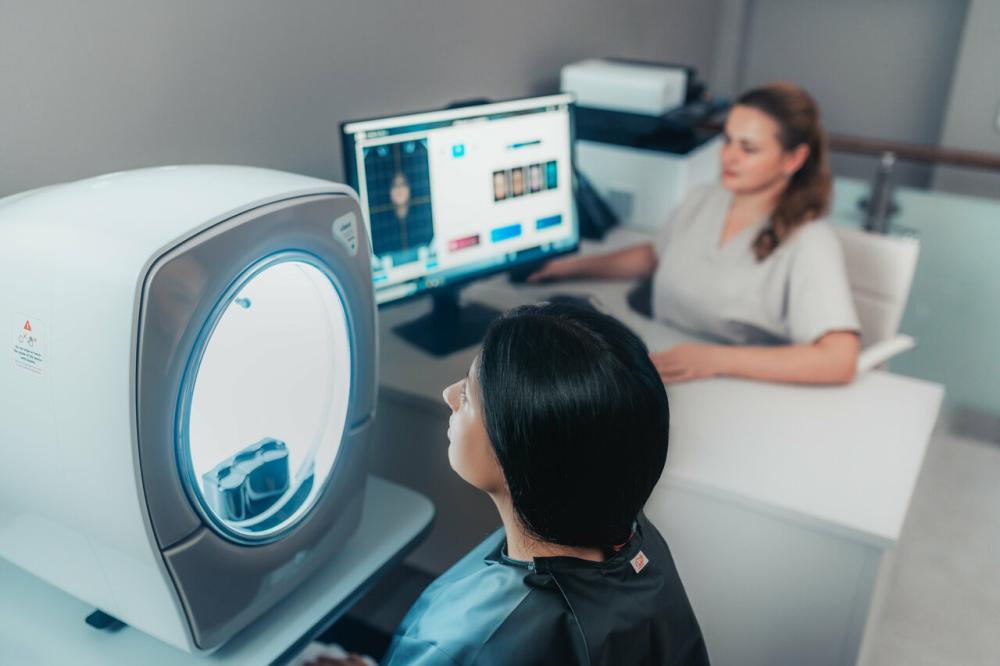
How Can VISIA Skin Analysis Help You Understand Your Pores?

Pores are small openings on the surface of the skin that allow natural oils and sweat to reach the outer layer. Their appearance can vary depending on skin type, oil production, age, and daily skincare habits. While some pores are barely noticeable, others may appear enlarged, dark, or unevenly distributed across the face. Understanding these differences can help you make informed decisions about skincare. VISIA Skin Analysis in Dubai offers a way to examine visible pore characteristics through detailed facial imaging, helping you gain a clearer understanding of your skin's surface.
Why Are Pores More Visible in Certain Areas?
Pores are not equally noticeable across every part of the face. The nose, forehead, and inner cheeks often have more visible pores because these areas can produce higher amounts of natural oil. Several factors can influence how pores look:
-
Natural oil production: Excess oil can make pore openings appear more prominent.
-
Skin texture: Uneven skin surfaces may draw additional attention to pores.
-
Age-related changes: Changes in skin elasticity can affect the appearance of pore openings.
-
Environmental exposure: Sun exposure and environmental impurities may contribute to visible changes in skin texture.
Identifying Pore Visibility Across the Face
One useful aspect of facial imaging is the ability to examine different facial areas more consistently. Pores around the nose may look different from those on the forehead or cheeks, and these differences can be difficult to compare through casual observation.
A clearer view of pore distribution can also help you understand whether your concerns are concentrated in a particular region or spread across the face. This information provides a useful starting point for evaluating your existing skincare habits and identifying areas that deserve closer attention.
Understanding the Difference Between Visible Pores and Skin Texture
Visible pores and uneven skin texture are related concerns, but they are not identical. Pores are natural openings, whereas texture refers to the overall smoothness and consistency of the skin's surface.
For example, a person may have noticeable pores around the nose while maintaining relatively smooth cheeks. Another person may have less prominent pores but experience roughness or irregular skin texture across a wider area. VISIA imaging can help make these distinctions easier to observe by presenting detailed views of the skin.
Exploring the Relationship Between Oil and Pore Appearance
Natural oil plays an important role in maintaining skin moisture and supporting the skin's protective barrier. However, when oil accumulates on the surface, pores may become more noticeable, particularly in areas that already produce substantial sebum.
People with oily or combination skin frequently notice greater pore visibility around the nose, forehead, and cheeks. Nevertheless, visible pores are not exclusive to these skin types.
Recognizing Dark Spots Within Pore Openings
Some pores appear darker than the surrounding skin, creating the impression of tiny black dots. These marks may be associated with oxidized oil and debris within the pore, commonly seen with open comedones, also known as blackheads.
Detailed facial images can help you examine the distribution of visible pore openings and identify areas where dark spots are more noticeable. This distinction is useful when considering whether your concern relates primarily to pore size, surface discoloration, or congestion.
Comparing Pore Patterns With Overall Skin Appearance
Pore visibility is only one aspect of facial skin appearance. Other characteristics, including pigmentation, fine lines, redness, and uneven texture, can influence how smooth or balanced the skin looks overall.
A detailed facial assessment allows pore patterns to be considered alongside these broader features. For instance, pores may appear more prominent in areas where texture is uneven, while surrounding pigmentation can create additional visual contrast.
Understanding Your Skin's Individual Characteristics
Everyone has a different pattern of pore visibility. Genetics, skin type, age, and personal skincare habits all contribute to these differences. Useful observations may include:
-
Whether pore visibility is concentrated around the nose or cheeks.
-
Whether prominent pores appear alongside uneven texture.
-
Whether dark spots are distributed across particular facial areas.
-
Whether different regions show noticeable variations in surface appearance.
Using Skin Awareness to Make Better Skincare Choices
Understanding your pores can support more thoughtful skincare decisions. Products that suit one skin type may not be appropriate for another, so identifying your skin's visible characteristics is an important part of choosing suitable everyday care.
Gentle cleansing, appropriate moisturization, and daily sun protection can support general skin health. Ingredients such as salicylic acid may also help some people manage clogged pores, although suitability depends on individual skin sensitivity and needs.
Final Thoughts
Understanding your pores begins with recognizing that they are a normal and necessary feature of healthy skin. Their visibility differs across facial areas and can be influenced by oil production, texture, age, and other individual characteristics. VISIA facial imaging provides a detailed way to examine pore appearance, identify areas of greater visibility, and distinguish pore-related concerns from other surface irregularities. These insights can help you approach skincare with greater awareness and more realistic expectations.


