








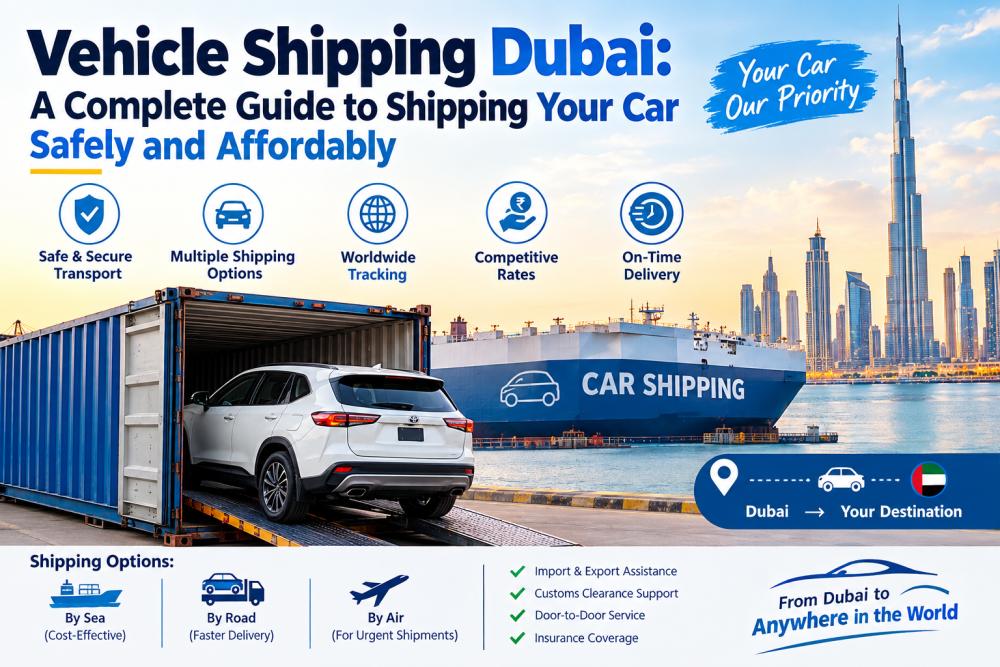
Vehicle Shipping Dubai: A Complete Guide to Shipping Your Car Safely and Affordably

Moving a car from one country to another, or even across cities, is far more complicated than most people expect. There are shipping methods to compare, customs regulations to satisfy, documentation to prepare, and insurance to arrange. One missed step can mean weeks of delay, unexpected charges, or damage to a vehicle you have invested in.
This guide explains how vehicle shipping in Dubai works, what your options are, how to prepare your car, and how to choose a shipping partner you can rely on.
Why Professional Vehicle Shipping Matters
Shipping a car is not like shipping a parcel. Vehicles are high-value assets, and the process involves multiple parties — shipping lines, freight forwarders, customs authorities, and port handlers. Without an experienced partner, problems tend to appear at the worst possible moments.
A professional shipping company handles the paperwork, coordinates with customs, arranges appropriate loading methods, and keeps you informed about where your vehicle is at every stage. Delays, additional costs, and damage are largely avoided when the process is managed properly.
Whether you are an individual relocating overseas or a business moving a fleet, the difference between a smooth shipment and a stressful one usually comes down to the logistics firm you choose.
Shipping Methods: Which Option Suits Your Vehicle?
There are three main methods for shipping a car out of Dubai, and each has clear advantages depending on your priorities.
Container Shipping
Your vehicle is loaded into a secure shipping container, either on its own or alongside other vehicles. This method offers the highest level of protection because the car is fully enclosed and not exposed to weather, salt air, or handling at multiple points.
Container shipping is particularly suitable for luxury vehicles, classic cars, or any vehicle where condition preservation is the top priority. It is also the common choice when you are shipping personal belongings along with the car. The main drawback is cost — container shipping is the most expensive of the three options.
Roll-on/Roll-off (RoRo) Shipping
With RoRo, your car is driven onto a specialised vessel and secured for the voyage. There is no container involved. This method is significantly cheaper than container shipping and is widely used for standard vehicles.
The trade-off is exposure. Your car sits in an open deck environment, which means it is subject to weather conditions and minor handling risks. RoRo also typically requires the vehicle to be in running condition with minimal fuel in the tank.
Air Freight
Air freight is the fastest option, often measured in days rather than weeks. It is considerably more expensive and generally reserved for urgent situations — an executive relocating on short notice, a high-value or rare vehicle, or a time-sensitive commercial requirement.
For most individuals and businesses, the choice comes down to container versus RoRo, with air freight used only when speed justifies the premium.
Preparing Your Vehicle for Shipment
How well you prepare your car directly affects how it arrives. A few standard steps make a meaningful difference.
Clean the vehicle thoroughly. Customs authorities in many countries require vehicles to be free of soil, plant matter, and insects. A dirty car can be held at the port.
Inspect and document condition. Take dated photographs from multiple angles, including any existing scratches or dents. This protects you if a damage claim arises later.
Check fluid levels and battery. For RoRo shipments, the car generally needs to be operational. For container shipments, the battery is often disconnected.
Reduce fuel. Most shipping lines require a low fuel level, typically around a quarter tank or less.
Remove personal items. Unless you are shipping a full container and have declared the contents, personal belongings left in the car may be removed or cause customs problems.
Secure loose parts. Fold mirrors where possible, secure any loose trim, and make sure the spare tyre and tools are properly stowed.
Gather your documents. You will typically need the original registration card, passport copies, purchase invoice, and a no-objection certificate where applicable.
Customs Clearance and Documentation
Customs is where most shipping delays occur. Different destination countries have different rules, duties, and inspection procedures. Some allow duty-free import for returning residents or for vehicles of a certain age, while others impose strict age limits on imported cars.
A professional shipping company handles this side of the process for you. They prepare the bill of lading, coordinate with the destination agent, submit customs declarations, and advise you on duties and taxes in advance so there are no surprises.
This is one of the strongest arguments for using an experienced firm rather than attempting to arrange shipping directly. Customs errors are expensive and slow to resolve.
Insurance: Do Not Skip This
Marine insurance for vehicle shipments is not optional in practice. Even with careful handling, ships encounter rough weather, and ports involve heavy machinery operating close to your vehicle. Without insurance, you absorb the full loss in the event of damage.
Ask your shipping partner what coverage is included by default and what additional coverage is available. Confirm the basis of valuation — whether it is the vehicle's declared value or a depreciated figure — and understand the claims process before you ship, not after.
Tracking Your Shipment
Reputable shipping companies provide tracking so you can follow your vehicle's progress. Depending on the firm, this may include container tracking numbers, milestone updates at loading and discharge, or regular status communication from your account manager.
Knowing where your car is reduces anxiety considerably, particularly on long ocean routes that can take several weeks.
Choosing the Right Vehicle Shipping Partner in Dubai
Dubai has many logistics companies, and not all are equally equipped for vehicle shipping. Here is what to look for.
Experience with vehicles specifically. General freight experience is not the same as vehicle shipping experience. Ask how many cars they handle and on which routes.
Transparent pricing. Request a full breakdown covering shipping charges, customs fees, port charges, and insurance. Be wary of quotes that seem unusually low — they often exclude essential costs that appear later.
Insurance provision. Confirm coverage is available and understand exactly what it covers.
Communication. A responsive team that answers questions before you commit is a good indicator of how they will behave once your car is in transit.
Customs expertise. Ask specifically about destination-country requirements, duties, and any age restrictions on imported vehicles.
For a full overview of the services and options available, see this vehicle shipping Dubai page, which covers container, RoRo, and air freight options along with customs assistance and insurance.
Relocating More Than Just a Car?
If you are moving a business rather than just a vehicle, the logistics requirements expand considerably. Office furniture, IT equipment, files, and sensitive documents all need professional handling, and business downtime has a direct financial cost.
Corporate relocations differ from residential moves because they involve specialist equipment, careful sequencing, and often out-of-hours scheduling to avoid disrupting operations. If this applies to you, it is worth reviewing dedicated office relocations in Dubai services alongside your vehicle shipping arrangements.
Common Mistakes to Avoid
Booking on price alone. The cheapest quote often excludes customs, port charges, or insurance.
Leaving personal items in the car. This can delay customs clearance or result in items being removed.
Not documenting existing damage. Without dated photographs, damage claims become difficult to support.
Ignoring destination-country rules. Some countries restrict imports by vehicle age, emission standards, or model type. Check before you ship.
Skipping insurance. The cost of coverage is small compared to the cost of an uninsured loss.
Assuming the car will be drivable on arrival. If the battery was disconnected or fuel was drained, plan for that at the destination.
Frequently Asked Questions
How long does vehicle shipping from Dubai take? Transit time depends on the destination and shipping method. Air freight is fastest, container and RoRo shipments typically take several weeks depending on the route.
Is container shipping better than RoRo? Container shipping offers greater protection; RoRo is more economical. The right choice depends on your vehicle's value and your budget.
Do I need to be present for shipping? Generally no, provided documentation is complete and you have authorised a representative where required.
What documents are needed? Usually the original registration card, passport copies, purchase invoice, and any destination-specific certificates.
Can I ship a non-running vehicle? Container shipping is generally the better option for non-running vehicles. RoRo usually requires the car to be operational.
Is insurance mandatory? It is not always legally required, but it is strongly recommended and treated as standard practice in professional vehicle shipping.
Final Thoughts
Vehicle shipping is a process where preparation and partner selection determine the outcome. Choose the right shipping method for your vehicle and budget, prepare the car properly, gather documentation early, and insist on transparent pricing and adequate insurance.
Do that, and your car arrives in the condition it left — which is exactly what you are paying for. If you are ready to move forward, review the car shipping Dubai services available and request a quote so you can compare options with full cost visibility before committing.


