








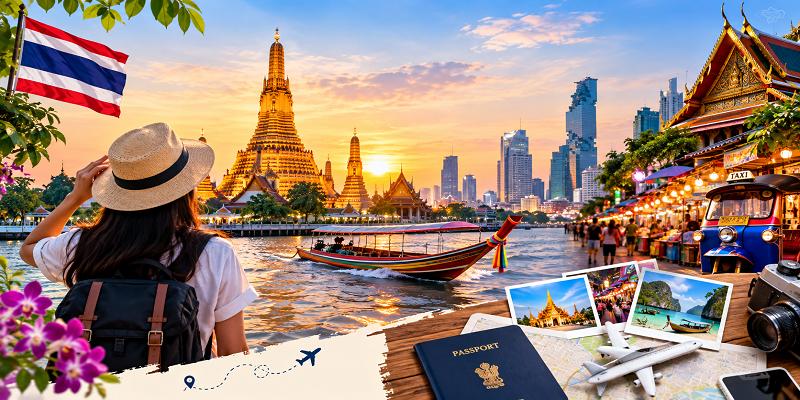
Bangkok Travel Planning Guide for Indian Holidaymakers

A good Bangkok trip starts with three decisions: when to go, where to stay, and how many days to spend. Bangkok is Thailand's capital and its biggest city. It mixes royal temples, street food, malls, river cruises, and nightlife in one place, and it is only a 4 to 5 hour flight from most Indian metros.
The city can feel huge for first-time visitors. Traffic, heat, and endless options make planning harder than it looks. The easiest way to handle this is to split the city into zones: the old town with temples, the modern Siam shopping area, the riverside, and the nightlife districts.
Many Indian travellers like to compare fixed plans before deciding on flights and hotels. Options like Bangkok city holidays from India usually bundle airport transfers, hotel, sightseeing, and a Chao Phraya river cruise, which helps first-timers avoid guesswork.
This guide covers timing, areas to stay, attractions, food, transport, budget, and practical tips. Every section works on its own, so you can jump to what you need.
Key Takeaways
- Best time to visit: November to February for cooler, drier weather.
- Ideal duration: 3 to 4 days for Bangkok alone, 6 to 8 days with Pattaya or Phuket.
- Best areas to stay: Sukhumvit, Siam, Riverside, and Old Town.
- Must-see places: Grand Palace, Wat Pho, Wat Arun, Chatuchak Market, and Asiatique.
- Getting around: BTS Skytrain, MRT, Grab, and river boats.
- Food: Vegetarian and Jain options are easy to find with a little planning.
- Dress code: Cover shoulders and knees at temples.
Why Bangkok Is Popular Among Indian Travellers
Bangkok is popular with Indians because of short flight time, good value, easy English in tourist areas, wide hotel choice, and strong shopping and food options.
Direct flights connect Delhi, Mumbai, Bengaluru, Kolkata, Chennai, Hyderabad, and other cities to Suvarnabhumi Airport (BKK) and Don Mueang Airport (DMK). Many flights are frequent, which gives flexible dates.
Bangkok suits several traveller types:
- Families: Safari World, aquariums, malls, and river cruises
- Couples: Rooftop dinners, spa evenings, and riverside stays
- Friends' groups: Nightlife, street food, and shopping
- Solo travellers: Hostels, walking tours, and safe transit
- Shopping lovers: Chatuchak, MBK Center, Siam Paragon, and Iconsiam.
Best Time to Visit Bangkok
The best time to visit Bangkok is November to February, when temperatures are lower and rainfall is minimal.
|
Season |
Months |
Weather |
What to Expect |
|
Cool season |
Nov to Feb |
Pleasant, less humid |
Best for sightseeing, higher prices |
|
Hot season |
Mar to May |
Very hot and humid |
Fewer crowds, take midday breaks |
|
Rainy season |
Jun to Oct |
Frequent showers |
Lower rates, flexible plans needed |
Bangkok stays warm all year. Even in the cool season, afternoons can feel hot, so plan temple visits for early morning. During the rainy season, showers are usually short and often fall in the late afternoon.
How Many Days Do You Need in Bangkok?
Three to four days is enough to see the main sights of Bangkok. Add more days if you plan day trips or want to combine it with another destination.
Trip length depends on your travel style and budget. Planning your overall Asia trip duration helps you decide whether Bangkok stays a standalone city break or becomes part of a multi-stop journey.
|
Trip Length |
What You Can Cover |
|
3 days |
Temples, one mall day, river cruise, night market |
|
4 days |
Above plus Ayutthaya or floating market |
|
5 to 6 days |
Add Safari World, shopping, and relaxed evenings |
|
7 to 8 days |
Bangkok plus Pattaya or Phuket. |
Where to Stay in Bangkok
Stay in Sukhumvit for convenience and food, Siam for shopping, Riverside for luxury and views, and Old Town for temples and budget stays.
Sukhumvit
Sukhumvit is the most popular choice for Indian travellers. It has BTS Skytrain access, Indian restaurants, malls, spas, and a huge range of hotels. It works for families, couples, and groups.
Siam and Pratunam
This area is the shopping centre of Bangkok. Siam Paragon, MBK Center, and Platinum Mall are nearby, and BTS access is excellent. It is ideal if shopping is a priority.
Riverside (Chao Phraya)
Riverside hotels offer river views, boat access, and calm evenings. Iconsiam and Asiatique are close. It suits couples and travellers who want a more relaxed stay.
Old Town and Khao San Road
This zone is close to the Grand Palace, Wat Pho, and Wat Arun. It is budget-friendly and lively, but can be noisy. It suits backpackers and travellers focused on temples.
Stay Options at a Glance
|
Area |
Best For |
Budget Level |
|
Sukhumvit |
Families, first-timers |
Mid to high |
|
Siam/Pratunam |
Shoppers |
Mid |
|
Riverside |
Couples, luxury |
Mid to high |
|
Old Town |
Backpackers, culture |
Low to mid |
Top Things to Do in Bangkok
The top attractions in Bangkok are the Grand Palace, Wat Pho, Wat Arun, Chatuchak Weekend Market, a Chao Phraya river cruise, and Asiatique The Riverfront.
Temples and Culture
- Grand Palace: Bangkok's most famous landmark, with the Temple of the Emerald Buddha
- Wat Pho: Home to the giant Reclining Buddha and traditional Thai massage school
- Wat Arun: A striking riverside temple, best at sunset
- Jim Thompson House: A quiet cultural stop.
Dress modestly at all temples. Shoulders and knees should be covered.
Shopping and Markets
- Chatuchak Weekend Market: Thousands of stalls, open on weekends
- MBK Center: Budget electronics, clothes, and souvenirs
- Siam Paragon and Iconsiam: Premium malls with dining and aquariums
- Pratunam Market: Popular for clothing bargains.
Family and Leisure
- Safari World: A large safari park with shows
- Chao Phraya dinner cruise: Riverside views with dinner
- Asiatique The Riverfront: Night market with Ferris wheel and restaurants.
Day Trips from Bangkok
- Ayutthaya: Ancient temple ruins and a UNESCO World Heritage site
- Damnoen Saduak Floating Market: A classic photo stop
- Kanchanaburi: History and the River Kwai bridge.
Bangkok Food Guide for Indian Travellers
Bangkok has plenty of Indian, vegetarian, and Jain-friendly options, especially in Sukhumvit, Pahurat (Little India), and larger malls.
Popular Thai dishes include pad thai, green curry, tom yum, mango sticky rice, and som tam. Street food is a highlight, but choose busy stalls with good turnover.
Tips for Vegetarian and Jain Travellers
- Ask for "jay" (Thai vegetarian) food
- Tell restaurants clearly about egg, fish sauce, and shrimp paste
- Visit Indian restaurants in Sukhumvit and Pahurat
- Carry snacks for long sightseeing days
- Inform your hotel and tour operator in advance.
Getting Around Bangkok
The BTS Skytrain and MRT are the fastest ways to avoid Bangkok traffic. Use Grab for door-to-door trips and river boats for scenic travel.
- BTS Skytrain and MRT: Fast, clean, and affordable
- Grab: Transparent pricing and easy for visitors
- Taxis: Insist on the meter
- Tuk-tuks: Fun for short rides, but agree on the price first
- Chao Phraya Express Boat: Scenic and useful for temple areas.
Avoid road travel during peak hours if possible, as traffic can be heavy.
Sample Bangkok Itinerary (4 Days)
A balanced 4-day Bangkok plan covers temples, shopping, a river cruise, and one day trip or family attraction.
- Day 1: Arrive, check in, evening at Asiatique or a river cruise
- Day 2: Grand Palace, Wat Pho, Wat Arun, Old Town walk
- Day 3: Chatuchak Market, Siam malls, dinner at a rooftop restaurant
- Day 4: Ayutthaya or Safari World, shopping, departure.
Travellers with extra days often add a beach stop. Some pair Bangkok with Phuket island trips for a city-plus-beach holiday, while others prefer a broader plan such as Thailand Travel Packages that cover Bangkok, Pattaya, and Phuket in one route.
Bangkok Budget: What to Expect
Bangkok works for all budgets. Costs depend mainly on hotel category, food choices, shopping, and paid attractions.
Main expenses include:
- Flights from India
- Hotel stay
- Airport transfers and local transport
- Food and drinks
- Attractions and day tours
- Shopping
- Travel insurance and visa (if required).
Money-Saving Tips
- Travel in shoulder or rainy season
- Eat at local restaurants and night markets
- Use BTS and MRT instead of taxis
- Compare prices at malls and markets before buying
- Book popular tours in advance.
Challenges and Things to Know
Common challenges in Bangkok include heat, traffic, crowds, and tourist overpricing. All of them are manageable with planning.
- Heat and humidity: Carry water, sunscreen, and light clothing.
- Traffic: Use the Skytrain or plan travel at off-peak times.
- Tourist scams: Be careful with unofficial tuk-tuk drivers offering "cheap tours."
- Temple rules: Dress code is strictly followed.
- Language gap: English is common in tourist areas, but less so in local markets.
- Overpacking: Bangkok shopping is easy, so leave space in your bag.
Practical Travel Checklist
- Passport valid for at least 6 months
- Check current visa or entry rules for Indian citizens
- Flights and hotel bookings saved offline
- Travel insurance
- Thai Baht in cash plus a card
- Light cotton clothes and one modest outfit for temples
- Comfortable walking shoes
- Power adapter and power bank
- Basic medicines and mosquito repellent
- Digital copies of important documents.
Future Trends in Bangkok Travel
Bangkok tourism is moving toward digital payments, sustainable travel, wellness experiences, and longer multi-destination trips.
- Digital payments: QR and card payments are growing quickly.
- Sustainable travel: More eco-friendly tours and responsible tourism practices.
- Wellness tourism: Spas, yoga, and health-focused stays are increasing.
- Multi-country trips: Travellers combine Thailand with the Indian Ocean or Southeast Asia. Some even add island getaways through Seychelles tour packages after their Asia leg.
- Better transit: Expanding metro and rail lines improve movement across the city.
Conclusion
Bangkok rewards travellers who plan a little. Choose the right season, pick a base like Sukhumvit or Siam, and spread temples, markets, and food across your days. Three to four days give a solid first experience, and adding a beach stop makes the holiday more balanced.
With a smart itinerary, respect for local customs, and attention to heat and traffic, Bangkok is easy to enjoy for families, couples, and groups alike.
Frequently Asked Questions
1. How many days are enough for Bangkok?
Three to four days cover the main attractions. If you want day trips, shopping, or family attractions, plan five to six days. For a Bangkok-plus-beach trip, seven to eight days work well.
2. Which area is best to stay in Bangkok for Indian tourists?
Sukhumvit is the most popular because of BTS access, Indian restaurants, and many hotel options. Siam is better for shopping, and Riverside suits couples.
3. Is Bangkok safe for Indian tourists?
Bangkok is generally safe for tourists. Keep your belongings secure in crowded areas, use metered taxis or Grab, and avoid unofficial tour offers.
4. Is Bangkok good for vegetarian travellers?
Yes. Indian restaurants are common in Sukhumvit and Pahurat, and many Thai eateries can prepare vegetarian meals. Always mention egg, fish sauce, and shrimp paste.
5. Is Bangkok or Phuket better for a first Thailand trip?
Bangkok is better for culture, shopping, and food. Phuket is better for beaches and water activities. Many first-timers combine both.
6. What is the best time to visit Bangkok?
November to February is best because of cooler and drier weather. It is also peak season, so book flights and hotels early.
7. Do Indians need a visa for Bangkok?
Visa policies can change. Check the official Thai embassy or e-visa website before booking to confirm current rules.
8. What should I wear when visiting temples in Bangkok?
Cover your shoulders and knees. Avoid sleeveless tops, short shorts, and see-through clothing. Carry a light scarf or shawl for convenience


