








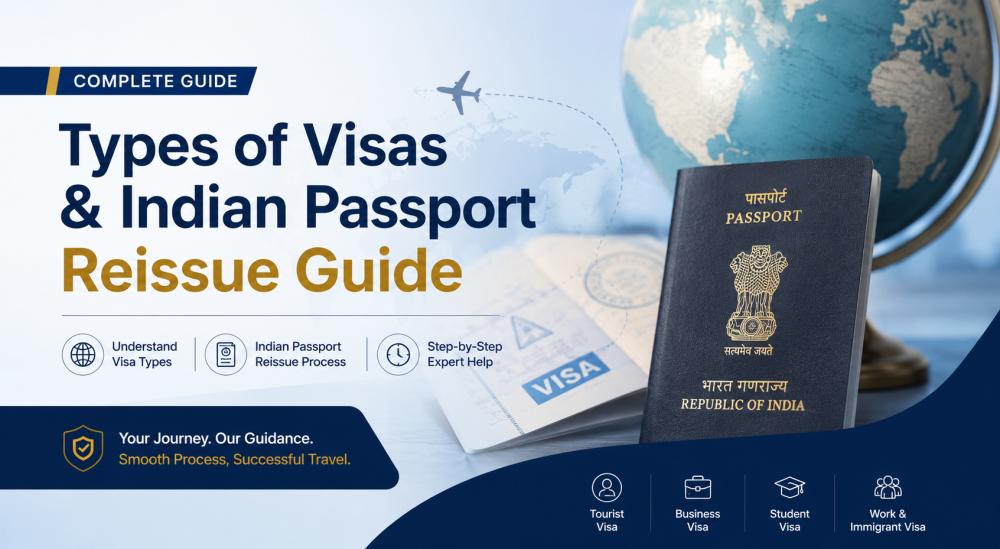
Types of Visas and Indian Passport Reissue in the USA

International travel can involve several different immigration and passport requirements, and choosing the right document is often the first challenge. Whether you are planning to visit another country, move permanently, work abroad, or renew an Indian passport while living in the United States, understanding the basic process can help you avoid unnecessary delays.
The types of visas available depend on the purpose and length of your travel. At the same time, an immigrant visa is designed for people who intend to live permanently in another country. Indian citizens living in the United States may also need to understand the process for reissue of an Indian passport in the USA when their passport is expiring, full, damaged, or requires updated information.
What Is a Visa?
A visa is an official authorization that allows a traveler to request entry into a foreign country for a specific purpose. The requirements vary by destination, nationality, travel purpose, and duration of stay.
A visa does not always guarantee entry. Immigration officers at the destination may still verify documents and determine whether the traveler meets the country's entry requirements.
Before applying, it is important to identify the correct visa category rather than simply choosing the fastest or easiest option.
Common Types of Visas
Different countries use different visa classifications, but many visa systems include categories based on the traveler's purpose.
Tourist or Visitor Visa
A tourist visa is generally intended for short-term travel, such as vacations, sightseeing, visiting friends or relatives, or attending certain personal events. Applicants may need to provide a valid passport, application forms, photographs, financial information, travel details, and other supporting documents.
Business Visa
A business visa may be appropriate for activities such as attending meetings, conferences, trade events, or negotiating business matters. It generally does not provide the same employment rights as a work visa.
Student Visa
Students planning to study at an eligible educational institution may need a student visa. The application can involve proof of admission, financial support, academic documents, and other requirements established by the destination country.
Work Visa
A work visa allows eligible foreign nationals to perform employment-related activities under specific conditions. Depending on the country, the applicant may need a job offer, employer sponsorship, labor authorization, or evidence of professional qualifications.
Transit Visa
A transit visa may be required when a traveler passes through a country on the way to another destination. Whether one is necessary depends on nationality, airport, itinerary, and local immigration rules.
Immigrant Visa
An immigrant visa is generally associated with permanent immigration. It may allow an eligible individual to travel to a country with the intention of becoming a permanent resident.
Immigrant visa programs can be based on family relationships, employment, special immigration categories, or other eligibility pathways. Because permanent immigration involves more detailed requirements, applicants should carefully review the applicable rules and supporting-document requirements before submitting an application.
Immigrant Visa vs. Nonimmigrant Visa
One of the easiest ways to understand visa categories is to separate them into two broad groups: immigrant and nonimmigrant visas.
A nonimmigrant visa is normally intended for temporary travel or temporary residence. Examples can include tourism, short-term business, study, or certain temporary employment categories.
An immigrant visa, by contrast, is generally intended for someone who plans to establish permanent residence in the destination country.
The distinction matters because the application process, documentation, eligibility standards, and long-term immigration consequences can be significantly different.
When Do You Need an Indian Passport Reissue in the USA?
Indian citizens living in the United States may need a reissue of an Indian passport in the USA for several reasons. A passport may be approaching its expiration date, have no available visa pages, be damaged, or require changes to personal information.
Reissue is different from simply receiving a completely unrelated travel document. The applicant's existing passport details and supporting records may be reviewed as part of the application process.
Common situations that may require passport reissue include:
- Expiration or upcoming expiration of the existing passport
- Exhaustion of available pages
- Damage to the passport
- Changes in personal information
- Certain changes to appearance or other passport details
- Updating information when required under applicable passport rules
Applicants should check the current requirements applicable to their location in the United States before preparing an application.
Documents Commonly Needed for Passport Reissue
The exact documentation can vary depending on the applicant's circumstances and the reason for reissue. Applicants may generally need their current Indian passport, completed application information, photographs, proof of address, and supporting documents related to any requested changes.
For example, someone requesting a change in personal information may need additional evidence supporting that change.
It is important to ensure that names, dates of birth, addresses, and other details are consistent across the application and supporting documents. Incomplete or inconsistent information can result in additional questions or processing delays.
How to Avoid Common Visa and Passport Problems
Many application problems can be reduced by preparing documents carefully before submission. Start by determining the correct category and reviewing the current official requirements. Do not rely solely on information from an old application because immigration and passport procedures can change.
Check your passport's expiration date before making international travel plans. Some destinations require travelers to have a certain amount of passport validity remaining after their intended entry or departure date.
You should also make sure that photographs meet the applicable specifications and that forms contain accurate information. Keep copies of submitted documents and application confirmations for your records.
Frequently Asked Questions
How many types of visas are there?
There is no single worldwide number because every country establishes its own visa categories. Common categories include tourist, business, student, work, transit, family-based, and immigrant visas.
What is an immigrant visa used for?
An immigrant visa is generally used by eligible individuals who intend to move to another country and establish permanent residence under that country's immigration laws.
Can I apply for an Indian passport reissue while living in the USA?
Yes. Indian citizens residing in the United States can apply for passport reissue through the applicable Indian passport and consular service process for their jurisdiction. Requirements can depend on the applicant's circumstances and location.
Should I renew my passport before applying for a visa?
It can be helpful to check passport validity requirements before starting a visa application. If your passport is close to expiration, you may need to address the passport issue first, depending on the destination country's rules.
Final Thoughts
Understanding the different types of visas can make international travel and immigration planning much easier. Tourist, business, student, work, transit, and immigrant visas serve different purposes, so selecting the appropriate category is an important first step.
For Indian citizens living in the United States, keeping a valid passport is equally important. If your passport is expiring, damaged, full, or needs certain information updated, researching the requirements for reissue of an Indian passport in the USA can help you prepare the correct documents and avoid preventable delays.
Because immigration and passport requirements can change, always verify the latest requirements with the relevant government or consular authority before submitting an application.


