








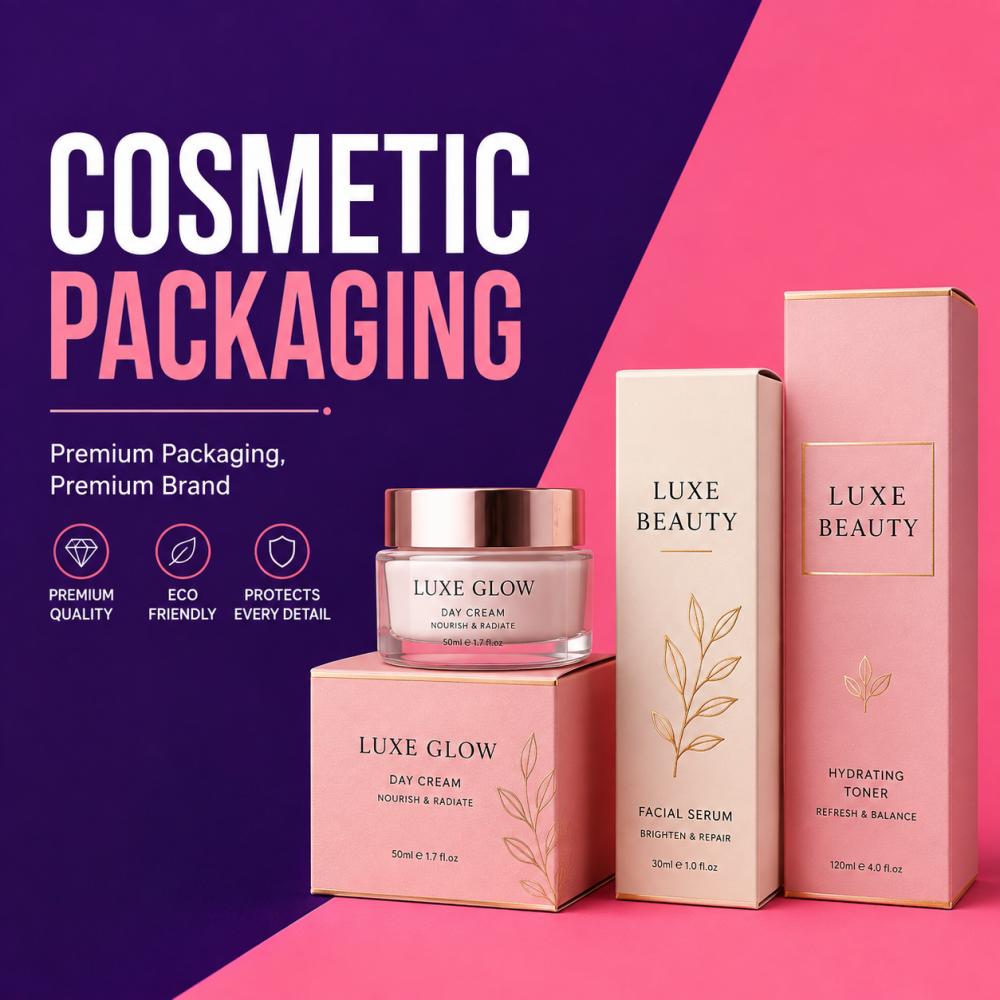
Beauty in the Box: Cosmetic Packaging That Sells the Product

In beauty retail, the box often gets touched, photographed, and judged before the product inside ever does. Cosmetic packaging carries more weight than almost any other packaging category because it has to do three jobs simultaneously: protect a delicate formula, signal quality on a crowded shelf, and photograph well for the inevitable unboxing post. Get it wrong and even a great product can look cheap; get it right and a modest formula can feel premium.
This guide walks through cosmetic packaging fundamentals and zooms into one of the category's trickiest formats — blush packaging — where fragile pans, mirrors, and powder formulas make structural design especially important.
What Makes Cosmetic Packaging Different
Cosmetic packaging isn't just a container — it's part of the product experience. Formulas are often fragile (pressed powders, cream compacts, glass bottles), price points skew toward premium positioning, and customers frequently buy based on how a product looks in photos before they ever open it. That combination means cosmetic packaging has to balance three priorities at once:
- Product protection, since pressed powders, palettes, and glass components crack or shatter under impact far more easily than most consumer goods
- Shelf and social presence, because beauty products are disproportionately purchased based on visual appeal, both in-store and on social media
- Regulatory and ingredient labelling, as most markets require specific labelling for cosmetic ingredients, batch codes, and usage instructions
Blush Packaging: A Category With Its Own Rules
Blush packaging deserves its own conversation because blush products are among the most fragile items in a beauty line. Pressed blush pans are thin, brittle, and prone to cracking if a box doesn't hold them firmly in place — and because blush is almost always sold with a mirror and sometimes a brush, the packaging has to secure multiple components, not just one.
Core Requirements for Blush Packaging
Effective blush packaging needs to address a few non-negotiables:
- Pan stability. The compact or box must hold the pressed powder pan firmly enough that it doesn't shift or crack during shipping, even with repeated handling.
- Mirror protection. Most blush compacts include an internal mirror, which needs its own secure mounting to avoid scratching or shattering in transit.
- Secondary packaging cushioning. The outer box (whether a rigid box, folding carton, or sleeve) needs internal inserts — foam, cardboard trays, or moulded pulp — to stop the compact itself from moving inside the shipping box.
- Reseal and reuse. Since blush is used repeatedly over weeks or months, the packaging structure (hinge, magnetic closure, or clasp) needs to hold up to frequent opening and closing without loosening.
Common Blush Packaging Formats
Brands typically choose between a compact-style rigid box with a magnetic or hinged closure for premium single-shade blush, a palette-style folding carton for multi-shade blush sets, or a window-front display box that lets the blush pan be visible on shelf while still protecting it during transit.
Materials Used in Cosmetic and Blush Packaging
Material choice in cosmetic packaging is driven by both protection needs and brand positioning.
Rigid boxes (chipboard wrapped in printed or textured paper) are the standard for premium blush compacts, foundation sets, and gift-tier cosmetics, offering a sturdy, high-end feel that folding cartons can't match. Folding cartons made from SBS (solid bleached sulphate) board are lighter and more cost-effective, well suited to single-item blush, powder, or lip products sold at mid-range price points. Kraft and recycled board options are increasingly used across both formats for brands leaning into a clean-beauty or sustainability positioning, without sacrificing the structural integrity needed to protect pressed powders.
Finishing Touches That Signal Quality
In cosmetic packaging specifically, finishing details carry outsized weight because customers associate them directly with product quality. Soft-touch matte lamination gives boxes a velvety, premium feel that photographs beautifully under studio lighting. Foil stamping (gold, rose gold, or silver) is a go-to for logos and accents on blush and highlighter packaging, reinforcing a luxury cue. Spot UV adds selective gloss over a matte base, often used to highlight a logo or pattern without overwhelming the design. Embossing or debossing creates a tactile, raised or recessed detail that customers physically feel when holding the box — a small but memorable detail for repeat-purchase categories like blush.
Designing Cosmetic Packaging for Shelf and Social Media
Cosmetic packaging design should account for how the product will actually be seen — not just once, but repeatedly across retail shelf, unboxing photos, and everyday use.
- Design the "flat lay" view. Many beauty products are photographed from directly above for social content, so the top-facing panel design matters as much as the front panel.
- Prioritise legible branding at small scale. Blush compacts and similar items are small; logos and shade names need to remain legible even when the packaging is a few centimetres across.
- Match closure mechanism to price point. Magnetic closures read as premium; snap or friction closures are more budget-appropriate for mass-market blush lines.
- Test structural integrity with the actual formula weight. A pressed powder pan and a cream blush have different weight distributions — packaging should be tested with the real product, not a placeholder.
Sustainability in Cosmetic Packaging
Beauty consumers increasingly factor packaging sustainability into purchase decisions, and cosmetic packaging has responded with recyclable rigid box options, refillable compact systems (where the outer casing is kept and only an inner pan is replaced), and reduced use of non-recyclable plastic windows or inserts. For blush packaging specifically, refillable compact systems are gaining traction as a way to keep the premium unboxing feel while cutting down on repeat packaging waste.
Frequently Asked Questions
What is cosmetic packaging?
Cosmetic packaging refers to the boxes, compacts, cartons, and containers used to house and present beauty products such as makeup, skincare, and fragrance, balancing product protection, regulatory labelling, and shelf or social media appeal.
What type of packaging is best for blush?
Rigid compact boxes with secure internal inserts are generally best for blush, since they protect fragile pressed powder pans and any included mirror from cracking, while also giving the product a premium, reusable feel.
Why is blush packaging more fragile than other cosmetics?
Pressed blush pans are thin and brittle by nature, and most blush compacts include a glass or acrylic mirror, meaning the packaging has to protect two fragile components at once rather than a single durable container.
Can cosmetic packaging be recycled?
Many components can be — paperboard boxes and cartons are typically recyclable, though mirrors, magnetic closures, and any plastic inserts usually need to be removed first since they're not accepted in standard paper recycling streams.
What finishing options work best for blush packaging?
Soft-touch matte lamination combined with foil stamping is a common premium combination for blush packaging, giving a tactile, high-end feel while keeping branding clearly legible at a small compact size.
Final Thoughts
Cosmetic boxes carries more pressure than most categories because it's judged on protection, presentation, and photographability all at once — and blush packaging pushes that even further with fragile pans, mirrors, and frequent reuse to account for. Getting the structure, material, and finish right isn't just about looking good on shelf; it's about the product still looking good after it's been shipped, dropped in a bag, and opened a hundred times.
If you're developing packaging for a blush line or a broader cosmetic range, DODO Packaging AU can help design rigid compact boxes, folding cartons, and inserts built around your specific formula and closure needs — from concept through production.


