








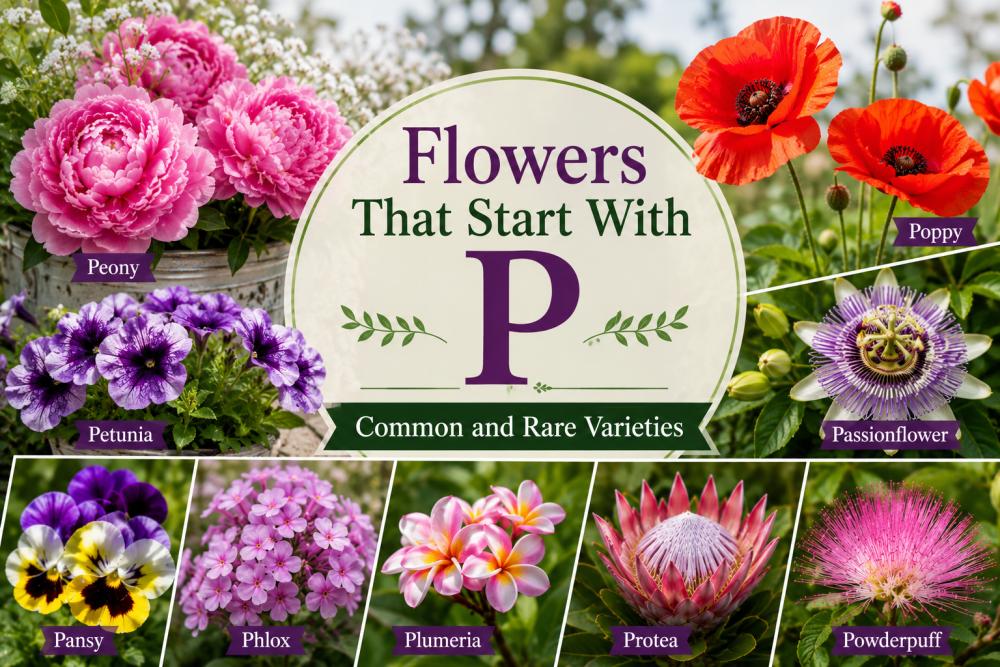
Flowers That Start With P: Common and Rare Varieties

The world of flowers is full of familiar names and surprising discoveries. Some blooms appear in gardens, bouquets, and parks almost everywhere. Others are harder to find and stand out because of their unusual shape, color, or growth style.
When you explore Flowers That Start With P, you find both sides of that world. There are well-known favorites such as peonies, poppies, and petunias. There are also less common choices such as pagoda flowers, parrot lilies, and prairie smoke.
This mix makes the letter P especially interesting for flower lovers. Whether you prefer classic garden blooms or something more unusual, there is plenty to discover.
What Makes P Flowers So Varied?
Not all flowers beginning with P look or grow in the same way.
Some have soft, rounded petals. Others form tall spikes, loose clusters, or detailed flower heads. Some are best known for bright color, while others stand out because of their shape or texture.
That variety gives Flowers That Start With P a wide appeal.
You can find flowers for cottage gardens, patio pots, borders, indoor displays, and tropical settings. You can also choose from red, yellow, pink, purple, white, orange, and mixed shades.
The right flower depends on the look and feeling you want to create.
Peony: A Familiar Favorite With Lasting Appeal
Peonies are among the most recognizable P flowers.
Their large blooms have many layers of soft petals. Pink and white are common, while red and coral shades can bring stronger color.
Peonies often become the main attraction in a flower bed because of their size.
They also work beautifully in cut flower arrangements. A few stems can create a full and elegant display.
Their classic shape makes them a popular choice for gardens with a soft or romantic style.
Petunia: Easy Color for Everyday Spaces
Petunias are often seen in hanging baskets, window boxes, and patio pots.
Their trumpet-shaped flowers come in many colors, including purple, pink, red, white, and mixed patterns.
One reason petunias remain popular is their visual impact.
A small group of plants can quickly make a plain balcony or entrance feel brighter.
They are also easy to combine with other flowers because their color range is so broad.
Poppy: Delicate Petals With Bold Personality
Poppies have a simple flower shape, but they are hard to miss.
Their thin petals often move with the breeze, giving them a light and natural appearance.
Red is the best-known color, but poppies also come in orange, yellow, pink, and white.
Among Flowers That Start With P, poppies are especially well suited to informal beds and natural garden styles.
Their open shape brings a sense of movement without making the space feel crowded.
Pansy: Small Flowers With Strong Character
Pansies are known for the dark markings on their petals.
These patterns often look like small faces, which makes the flowers easy to recognize.
Purple, yellow, orange, blue, white, and mixed shades are common.
Pansies are useful in pots and along the front edge of flower beds.
Their compact size makes them a good choice when you want bright color without using a large plant.
Primrose: A Cheerful Garden Classic
Primroses have a simple, open flower shape and strong color.
Yellow is common, but pink, purple, red, and white blooms are also widely seen.
They work well in small spaces because they usually stay low and neat.
A group of primroses can add a quick burst of color to a quiet corner.
Their friendly appearance makes them a popular choice for informal gardens and container displays.
Phlox: Soft Color in Clusters
Phlox creates groups of small flowers that form larger areas of color.
Pink, purple, white, and pale blue are among the most common shades.
Some forms stay low and spread across the ground. Others grow taller and fit well into mixed borders.
Phlox is useful when you want to connect different parts of a flower bed.
It can soften the look of larger plants and make the garden feel more complete.
Plumeria: Tropical Beauty With a Gentle Look
Plumeria has smooth petals and a clean, rounded shape.
Its flowers often blend white, yellow, pink, and red. Many also have a pleasant fragrance.
Plumeria is strongly linked with warm climates and tropical garden styles.
Its flowers look simple at first, but the soft color blends give them a distinctive beauty.
The YourHomify community often shares practical garden inspiration that helps people create outdoor spaces with more color, comfort, and personality.
Protea: A Rare-Looking Bloom With Strong Form
Protea has a bold appearance that makes it stand apart from traditional garden flowers.
Its flower head has layers of firm parts arranged around a central area.
Pink, cream, orange, and red shades are common.
Protea often becomes the main feature in a bouquet because of its strong shape.
For people exploring rare Flowers That Start With P, it is one of the most memorable names to know.
Prairie Smoke: A Flower Known for Texture
Prairie smoke offers a very different kind of beauty.
Its flowers are followed by soft, feathery seed heads that create a light and airy effect.
Rather than adding strong color, it adds texture and movement.
This makes prairie smoke a good fit for natural-style gardens.
It works especially well beside plants with larger or more colorful blooms.
Pagoda Flower: Layers of Tropical Color
Pagoda flower stands out because of the way its blooms form in layered clusters.
The bright flowers often create a tall and eye-catching display.
Its shape gives it a more unusual appearance than many common garden flowers.
This plant suits people who enjoy tropical-looking blooms with a strong visual presence.
It can become a striking feature in the right setting.
Parrot Lily: A Distinctive and Unusual Choice
Parrot lily has an exotic look that separates it from more familiar flowers.
Its petals often show bold color and markings.
The flower has a lively appearance and can bring more personality to a garden or floral collection.
It is less commonly mentioned than peonies or petunias, which makes it an interesting choice for people who enjoy discovering unusual varieties.
Penstemon: A Useful Flower for Height
Penstemon grows upright stems covered with smaller flowers.
The blooms may appear in pink, purple, red, or white.
Its vertical shape helps create height in a flower bed.
Penstemon works especially well behind shorter plants because it adds structure without creating a heavy look.
It also pairs nicely with rounded blooms and low-growing flowers.
Portulaca: Bright Color Near the Ground
Portulaca stays low and produces vivid flowers.
Yellow, pink, orange, red, and white shades are common.
It works well in containers, garden edges, and open areas where you want color close to the ground.
A group of portulaca plants can create a strong display without adding much height.
This makes it useful in layered garden designs.
Paperwhite: A Simple Flower for Indoor Displays
Paperwhites produce small white flowers with a clean and fresh appearance.
They are often grown indoors and can brighten a table, shelf, or windowsill.
Their simple color makes them easy to place in many home styles.
Paperwhites show that Flowers That Start With P are not only for outdoor gardens.
Some P flowers can also add beauty and freshness inside the home.
Painted Daisy: A Familiar Form With Bright Color
Painted daisies have a classic daisy shape with bright petals around a yellow center.
Pink, red, and white are common colors.
They work well in relaxed garden settings and mixed flower beds.
Their simple form makes them easy to combine with many other plants.
Painted daisies are a good bridge between familiar garden flowers and more unusual varieties.
Common or Rare: Which Type Is Right for You?
Common flowers have clear advantages.
They are familiar, easy to recognize, and often simple to include in a garden design.
Rare or unusual flowers offer something different.
They can become conversation pieces and make a space feel more personal.
There is no need to choose only one group.
You can pair peonies with prairie smoke, use petunias near a more unusual pagoda flower, or mix phlox with parrot lily.
Combining common and rare Flowers That Start With P often creates the most interesting result.
How to Build a Balanced P Flower Collection
Start by choosing one or two flowers that will attract the most attention.
Peonies, protea, or pagoda flowers can work as focal points.
Then add softer plants around them.
Phlox can create gentle areas of color. Portulaca can fill lower spaces. Penstemon can add height.
Think about shape as well as color.
A garden feels more natural when it includes different heights, textures, and flower forms.
This approach can help even a small collection feel varied and complete.
Final Thoughts
Exploring Flowers That Start With P reveals much more than a list of familiar garden names.
Peonies, petunias, poppies, and pansies remain popular because they are attractive and easy to enjoy. Yet rarer choices such as prairie smoke, pagoda flower, parrot lily, and protea bring a different kind of interest.
Each bloom adds something of its own.
Some provide strong color. Others bring height, texture, fragrance, or an unusual shape.
By mixing common and rare Flowers That Start With P, you can create a flower collection that feels balanced, distinctive, and full of character.
FAQs
Q1. What are the most common flowers that start with P?
Peonies, petunias, poppies, pansies, primroses, and phlox are among the most familiar flowers beginning with P.
Q2. What are some rare P flowers?
Prairie smoke, pagoda flower, parrot lily, and protea are less common choices with distinctive shapes or textures.
Q3. Which P flowers work well in small spaces?
Petunias, pansies, primroses, portulaca, and paperwhites can suit pots, balconies, and compact garden areas.
Q4. Which P flower makes a strong focal point?
Protea, peony, and pagoda flower can all create strong focal points because of their size, shape, or visual impact.
Q5. Can common and rare P flowers be grown together?
Yes. Mixing familiar blooms with unusual varieties can add contrast, depth, and more personality to a garden or flower display.


