








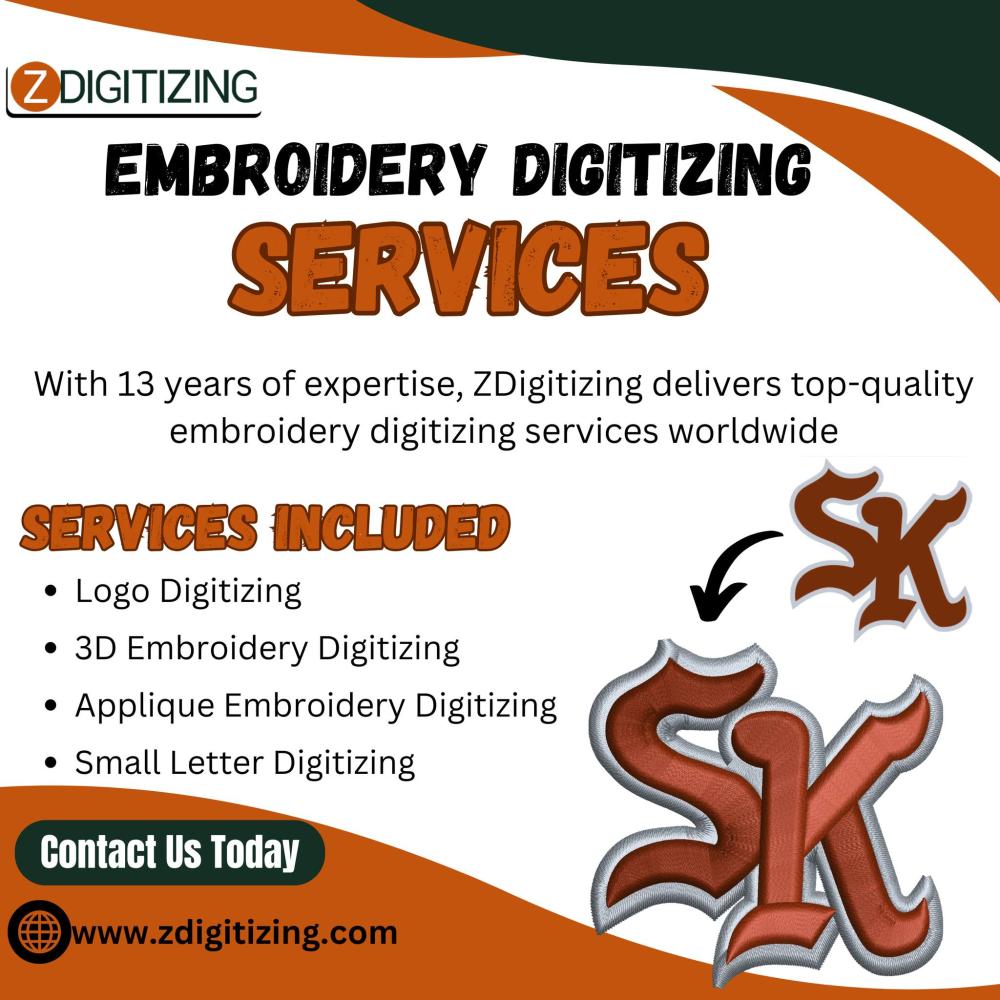
Logo Digitizing in USA: A Practical Guide for High-Quality Embroidery Branding

Branding today extends far beyond digital platforms. For businesses that rely on uniforms, promotional apparel, or customized merchandise, embroidered logos play a significant role in maintaining a professional image. Logo digitizing in USA supports this need by converting logo artwork into embroidery-ready files that ensure accuracy, durability, and consistency across all fabric applications.
Logo digitizing is a specialized process that combines technical knowledge, embroidery expertise, and design understanding. It is not simply about converting an image file; it requires thoughtful planning to ensure the logo stitches cleanly on different materials while preserving its original identity.
Understanding Logo Digitizing
Logo digitizing refers to the process of translating a logo design into a digital embroidery file that embroidery machines can interpret. This involves assigning stitch types, directions, densities, and sequences manually rather than relying on automatic software conversion.
A professionally digitized logo delivers:
- Clean outlines and readable details
- Balanced stitch density suited to the fabric
- Smooth stitching with reduced machine errors
Without proper digitizing, even a well-designed logo may appear distorted, uneven, or poorly finished once embroidered.
Why Professional Digitizing Matters for Businesses
Embroidery is often used for workwear, headwear, outerwear, and branded merchandise. These items represent a business directly, making quality control essential. Poor digitizing can result in thread breaks, fabric puckering, or unclear logo elements, all of which affect brand perception.
Professional logo digitizing helps businesses achieve consistency across different garments and production runs. It also ensures the logo remains recognizable when resized, stitched on varying fabrics, or produced in bulk. Over time, this consistency contributes to stronger brand recognition and reduced production issues.
How the Logo Digitizing Process Works
Although digitizing software is part of the workflow, the quality of the final file depends heavily on the digitizer’s experience. Each logo must be evaluated individually, taking into account its complexity and intended use.
The process typically includes reviewing the artwork, selecting suitable stitch types, adjusting stitch density based on fabric, planning stitch direction for visual clarity, and testing the file before final delivery. These steps ensure the logo performs well during embroidery and maintains its structure after repeated wear and washing.
Common Challenges in Logo Digitizing
Not every logo is naturally suitable for embroidery. Fine lines, small text, gradients, and overlapping elements often require adjustments to maintain clarity in stitched form. Different fabrics also behave differently under stitches, which can affect the final appearance.
Experienced digitizers address challenges such as simplifying intricate details, modifying text size, adjusting stitch density, and compensating for fabric stretch. These adjustments are made carefully to preserve brand identity while ensuring embroidery quality.
Who Benefits from Logo Digitizing Services?
Logo digitizing is useful for businesses of all sizes, not just large organizations. Apparel brands, promotional product suppliers, corporate teams, sports organizations, and small businesses all rely on digitized logos to maintain a professional look across their products.
Whether producing a limited batch of uniforms or managing large-scale embroidery orders, accurate digitizing ensures each logo is stitched consistently and reliably.
Current Trends in Logo Digitizing
As branding and apparel customization continue to evolve, logo digitizing has adapted to meet new demands. There is a growing focus on efficiency, compatibility with modern embroidery machines, and customization for specific garment types.
Many businesses now request digitized files optimized for performance fabrics, caps, and structured garments. There is also increasing demand for dimensional embroidery styles, such as 3D puff, which require precise digitizing techniques to execute correctly.
Choosing a Reliable Logo Digitizing Partner
Selecting the right digitizing service can significantly impact embroidery results. A dependable provider understands how different fabrics, logo styles, and embroidery machines interact.
When evaluating a digitizing service, businesses should look for proven experience, clear communication, revision support, and delivery of machine-compatible file formats. A knowledgeable digitizer helps reduce production delays and ensures consistent embroidery quality.
Final Thoughts
Logo digitizing in USA remains an essential part of embroidery branding for businesses that value quality and consistency. By transforming digital logos into stitch-ready designs, digitizing supports long-lasting, professional embroidery across a wide range of applications.
Investing in skilled logo digitizing is not just a technical decision it is a strategic step toward maintaining brand accuracy, reducing production issues, and presenting a polished image through embroidered apparel.
Frequently Asked Questions (FAQs)
What file formats are used in logo digitizing?
Logo digitizing files are created in embroidery-specific formats such as DST, PES, EXP, and others, depending on the embroidery machine being used.
Can one digitized logo work on all fabrics?
Not always. Different fabrics may require adjustments in stitch density, underlay, or stitch type to ensure the best embroidery result.
How long does logo digitizing take?
Turnaround time varies based on logo complexity, but most digitized logos can be completed within a short timeframe when handled by experienced professionals.
Is logo digitizing a one-time process?
A digitized logo can be reused multiple times, but revisions may be needed when changing fabric types, sizes, or embroidery styles.


