








How Gamified Hiring Tools Measure Cognitive and Emotional Skills

The hiring process has evolved significantly in recent years. Traditional interviews and written tests are no longer enough to evaluate a candidate’s full potential. Employers now look for tools that can measure not only technical skills but also cognitive abilities and emotional traits that predict success in real work environments. This shift has led to the rise of gamified hiring tools, which combine gameplay with scientific assessment to provide deeper insights into a candidate’s abilities.
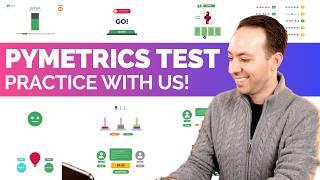
Many companies use platforms like the pymetrics assessment to evaluate candidates through game-based challenges. These tools are designed to measure how people think, react, and solve problems under pressure skills that are difficult to assess in a standard interview.
What Are Gamified Hiring Tools?
Gamified hiring tools are assessment platforms that use interactive games to evaluate candidates. Instead of answering long questionnaires or taking traditional aptitude tests, candidates complete short games that mimic real workplace scenarios. The idea is simple: behavior in games can reveal cognitive patterns, decision-making styles, and emotional responses.
Unlike traditional assessments that often rely on self-reporting, gamified tools track actual behavior and performance. This makes them more accurate and less biased. Candidates are evaluated based on how they play the game, not on how well they think they would perform.
Cognitive Skills Measured Through Gamification
Gamified hiring tools measure several cognitive skills that are crucial in modern work environments:
Problem-solving and logical reasoning: Many games present puzzles that require strategic thinking and a step-by-step approach. Employers use these to assess how candidates break down complex problems and identify solutions.
Attention, memory, and learning speed: Games often test a candidate’s ability to focus, remember patterns, and learn from feedback. These skills are essential for roles that require quick adaptation and continuous learning.
Risk assessment and decision-making: Candidates may be asked to make choices with uncertain outcomes. These games reveal whether a candidate is overly cautious or too impulsive, and how they balance risk with reward.
Emotional and Behavioral Skills Assessed
Gamified tools also measure emotional and behavioral traits that are harder to quantify through interviews:
Emotional intelligence and self-regulation: Some games track how candidates respond to setbacks or unexpected challenges. This helps employers assess emotional control and resilience.
Persistence and stress management: When games become difficult, persistence becomes visible. Employers can see whether candidates keep trying or give up quickly under pressure.
Social traits and adaptability: While not all games involve social interaction, many measure how well candidates adapt to changing rules and environments. This is important for teamwork and fast-paced workplaces.
The Science Behind Game-Based Skill Measurement
Gamified hiring tools are grounded in neuroscience and behavioral psychology. Researchers design games to capture specific cognitive and emotional behaviors. Each action within the game generates data that is analyzed using predictive models.
For example, the time taken to make decisions, response consistency, and error patterns all contribute to a candidate’s profile. This data is then compared to performance benchmarks and job-role requirements. In this way, employers can predict how candidates will perform in real-world situations based on their game behavior.
How Employers Interpret Assessment Results
Employers use game data to create detailed candidate profiles. Each game is mapped to specific traits, and the results are translated into meaningful insights such as problem-solving style, risk tolerance, and emotional stability.
These profiles help employers match candidates to roles that suit their strengths. For instance, a candidate with strong analytical skills but lower emotional resilience might fit a technical role better than a high-stress client-facing position.
Moreover, gamified tools help maintain fairness by evaluating everyone through the same standardized method, reducing bias that often appears in interviews.
Benefits of Gamified Hiring Tools for Employers
There are several benefits of using gamified tools in recruitment:
Reducing bias in recruitment: Because assessments are based on behavior rather than personal interviews, hiring decisions become more objective.
Improving candidate experience: Games are more engaging and less stressful than traditional tests, which can increase candidate participation and satisfaction.
Better prediction of job performance: Game-based assessments provide deeper insights into cognitive and emotional skills, which are strong predictors of job success.
These advantages explain why more companies are adopting gamified hiring platforms for entry-level, graduate, and even senior-level recruitment.
Common Challenges Candidates Face
While gamified assessments offer many benefits, candidates may face challenges:
Unfamiliar game formats: Many candidates are not used to game-based evaluations, leading to confusion or poor performance.
Managing time and pressure: Some games are timed, which can cause stress and impact performance.
Misunderstanding evaluation criteria: Candidates might not realize that the game is assessing behavior patterns rather than correct answers, causing them to focus on the wrong strategy.
Understanding these challenges can help candidates perform better by practicing and adapting to the format.
How Candidates Can Prepare for Gamified Assessments
To succeed in gamified hiring tools, candidates should focus on preparation:
Understand game mechanics: Familiarity with the game format reduces confusion and improves performance.
Practice cognitive control: Activities like puzzles, memory games, and logic exercises help improve attention and problem-solving skills.
Improve emotional regulation: Candidates should learn to stay calm under pressure and avoid overthinking. Practicing mindfulness or stress management techniques can help.
Time management: Practice games under timed conditions to improve speed without sacrificing accuracy.
By preparing strategically, candidates can perform confidently and showcase their true potential.
The Future of Gamified Assessments in Hiring
Gamified assessments are expected to become more advanced with AI and machine learning. Future tools may offer adaptive challenges that evolve based on a candidate’s performance, providing even more accurate insights.
As hiring becomes more global and remote, these tools will help companies scale evaluations without losing quality. Candidates will need to develop versatile cognitive and emotional skills to succeed in this new recruitment landscape.
Conclusion
Gamified hiring tools are transforming recruitment by measuring cognitive and emotional skills through interactive gameplay. These tools provide deeper insights into a candidate’s true potential, helping employers make more informed and fair hiring decisions.
Candidates who understand how these tools work and prepare effectively will have a clear advantage in today’s competitive job market.


