








AI in Agriculture: Precision Weather for Smarter Farming | Rubixe

What if farmers could anticipate the weather before it decides their harvest?
With monsoons arriving late, heatwaves striking unexpectedly, and storms erasing profits overnight, experience and intuition are no longer enough. As climate patterns grow unpredictable, AI in Agriculture is quietly changing how farmers plan, protect, and produce, starting with smarter, more reliable weather accuracy.
Climate Volatility Is Breaking Traditional Farming Models
- Irregular Rainfall Patterns: Unpredictable rainfall disrupts planting schedules and irrigation planning, increasing the risk of crop failure.
- Extended Drought Cycles: Longer dry periods strain water resources, reduce soil moisture, and lower crop productivity.
- Sudden Floods and Storms: Unexpected extreme weather events can damage crops, erode soil, and wipe out yields in a matter of hours.
- Heat Stress at Critical Stages: High temperatures during flowering or grain-filling stages reduce crop quality and overall yield.
- Limits of Generic Forecasts: City-focused weather predictions lack the precision farming requires, making field-level intelligence essential.
- Where AI Adds Value: AI in Agriculture fills this gap by delivering localized, crop-specific insights that help farmers act with confidence.
From Broad Forecasts to Hyperlocal Insights
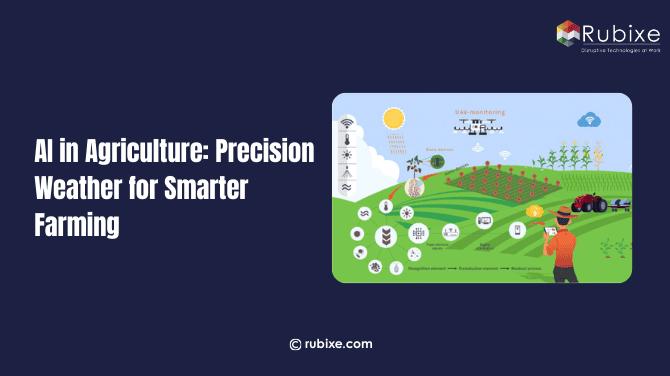
AI in Agriculture brings together satellite imagery, historical climate data, real-time sensor inputs, soil moisture readings, and crop growth stages to create highly localised, crop-aware weather predictions. Instead of broad assumptions, farmers receive precise insights that guide real decisions in the field.
The Limitations Farmers Know Too Well
- Overly Broad Forecasts: Traditional weather reports cover large geographic zones, offering little relevance to individual fields or farms.
- Delayed Updates: Forecasts often arrive too late, leaving farmers without time to adjust irrigation, planting, or harvesting plans.
- Lack of Crop and Soil Context: Conventional models ignore soil conditions and crop stages, reducing their usefulness for farm-level decisions.
- No Decision Impact Insight: Farmers are left to interpret how weather will affect yield, input usage, or risk on their own.
- AI-Driven Transformation: AI in Agriculture converts raw weather data into actionable intelligence that directly supports farming decisions.
Learning From Patterns Humans Can’t Track
AI models analyse decades of climate trends, microclimate behaviour, seasonal anomalies, and localised weather shifts to deliver more accurate forecasts. Unlike static models, these systems learn from every new weather event, continuously refining predictions and improving over time.
What AI-Driven Weather Intelligence Covers
- Rainfall Timing and Intensity: AI predicts when and how much rain will fall, helping farmers plan irrigation, sowing, and harvesting more accurately.
- Heat Stress Risk: Early warnings allow farmers to protect crops during sensitive growth stages and reduce yield loss.
- Frost Probability: AI alerts help farmers take preventive measures before frost damages crops.
- Wind Impact on Spraying: Accurate wind forecasts ensure safer and more effective pesticide or fertiliser application.
- Humidity-Driven Disease Risk: AI identifies conditions that encourage pests and diseases, enabling timely prevention.
- Smarter Farm Decisions: Each insight allows farmers to act earlier, reduce risk, and manage resources more efficiently.
Where Precision Weather Changes Outcomes
AI in Agriculture transforms weather from a risk into a planning advantage across the entire farming cycle. It helps farmers time sowing to avoid seed loss from delayed rains, manage irrigation to prevent overwatering, schedule fertilisation to stop nutrient washout, target pest control during weather-driven infestations, and plan harvesting to reduce post-harvest losses.
The Hidden Cost of Uncertainty
- Crop Stress: Inaccurate forecasts can expose crops to heat, drought, or excess moisture at critical growth stages.
- Reduced Yields: Poor timing of farming activities due to weather errors often leads to lower productivity.
- Higher Input Costs: Mistimed irrigation, fertilisation, or spraying increases waste and operational expenses.
- Missed Market Windows: Delayed or early harvests can cause farmers to lose optimal selling opportunities.
- AI-Driven Precision: AI-powered weather intelligence improves forecast accuracy, helping farmers make confident decisions and reduce risk.
What Fuels AI in Agriculture Models
AI-driven weather systems integrate ground sensors, satellite data, weather stations, farm management systems, and crop and soil data into one connected framework. By unifying these inputs, AI creates a single intelligence layer that delivers clearer, more actionable insights for farmers.
Measurable Benefits Farmers Experience
- Higher Yield Consistency: AI-driven insights help stabilise production by aligning farming actions with precise weather and crop conditions.
- Lower Irrigation Costs: Smarter water planning reduces waste and lowers energy and resource expenses.
- Reduced Chemical Usage: Targeted interventions cut unnecessary pesticide and fertiliser application.
- Improved Soil Health: Better timing and reduced stress preserve soil structure and nutrient balance.
- Stronger Climate Resilience: AI helps farms adapt to changing weather patterns without compromising output.
- Balanced Progress: AI in Agriculture boosts productivity while supporting sustainability without forcing trade-offs.
Acting Early Creates a Competitive Edge
Farmers using AI-driven weather insights adjust their plans days earlier, rely less on reactive decisions, and respond faster to changing climate conditions. While others act only after damage occurs, early adopters adapt in advance, protecting yields and reducing losses before they happen.
From Guesswork to Data-Backed Confidence
- Quantified Weather Risk: AI helps farmers measure weather-related risks instead of relying on guesswork.
- Scenario Comparison: Farmers can evaluate different weather scenarios and their potential impact on crops and costs.
- Contingency Planning: Early insights enable backup plans before conditions turn unfavourable.
- Balanced Decisions: AI supports smarter trade-offs between yield goals and input costs.
- A Proactive Shift: This approach moves farming from reactive survival to confident, proactive management.
Why Strategy Matters as Much as Software
Effective AI in Agriculture depends on clean, reliable data, clearly defined use cases, localised model tuning, farmer-friendly interfaces, and scalable infrastructure. AI consulting ensures these technologies are designed for real farming conditions, supporting practical decisions in the field, not just impressive dashboards.
How We Approach AI in Agriculture at Our Company
- Long-Term AI Capability: AI in Agriculture is treated as a sustained capability, not a one-time tool deployment.
- AI Consulting: High-impact use cases are identified based on real farming challenges and measurable outcomes.
- AI Readiness Audits: Data quality, infrastructure, and operational readiness are assessed before implementation.
- Scalable AI Services: Weather intelligence and automation solutions are designed to grow with farming operations.
- AI Staffing Support: Skilled professionals guide deployment, training, and long-term adoption.
- AI Cybersecurity: Strong security protects sensitive agricultural and operational data from emerging threats.
- Practical Field Intelligence: The focus remains on actionable insights that work in real fields, not theoretical models.
Smarter farming begins with smarter weather intelligence. AI in Agriculture doesn’t remove uncertainty, but it replaces guesswork with insight, delay with preparation, and risk with resilience. For farmers, agribusiness leaders, and policymakers, precision weather is no longer optional; it’s the foundation of sustainable, future-ready farming.


