








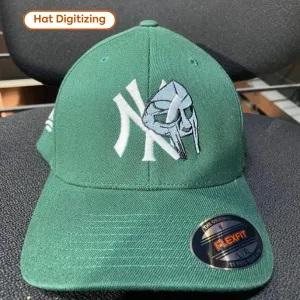
Hat Digitizing: Creating Professional Embroidered Designs

In the current fashion and promotional merchandise industry, customization plays a key role. Hats are no longer just functional items; they serve as a medium for personal expression, branding, and detailed designs. Producing precise, professional embroidery on hats requires a process called hat digitizing, which converts a design into a digital format suitable for embroidery machines.
Hat embroidery is more complex than standard flat embroidery because hats have curved surfaces and structured shapes. Understanding hat digitizing ensures that designs are accurately rendered, long-lasting, and visually appealing.
What is Hat Digitizing?
Hat digitizing is the process of converting artwork or logos into a set of instructions for an embroidery machine. These instructions define every aspect of stitching, including length, direction, density, and thread changes. Correctly digitized designs maintain clarity and durability, preventing issues that could compromise the finished product.
Hats present specific challenges. Unlike t-shirts or jackets, hats have a curved brim and a structured crown, which can distort designs if not properly adjusted. Professional digitizers carefully modify designs to account for these contours, ensuring the embroidery remains precise and aligned.
Why Hat Digitizing Matters
Accurate hat digitizing affects both the quality and longevity of the finished embroidery. Without proper digitizing, designs may experience:
- Puckering or bunching: Incorrect stitch density or direction can cause fabric distortion.
- Thread breakage: Dense stitching or complex patterns may lead to frequent thread snapping.
- Misalignment: Curved surfaces require precise stitch placement to maintain symmetry.
- Reduced durability: Poorly digitized designs may warp, fade, or wear unevenly.
Investing in professional digitizing improves both appearance and reliability, resulting in hats that look professional and maintain their quality over time.
Key Factors in Hat Digitizing
Successful hat digitizing requires careful consideration of multiple factors:
- Design complexity: Simple logos are easier to digitize, whereas intricate designs require detailed stitch planning.
- Hat type: Structured, unstructured, snapback, or fitted hats each need different stitching techniques.
- Fabric type: Cotton, polyester, wool blends, and mesh all react differently to embroidery.
- Curvature adjustments: Stitches must be aligned to prevent distortion on the hat’s curves.
- Thread selection: Thread type affects the durability, sheen, and overall appearance of the design.
Advantages of Professional Hat Digitizing
Professional digitizing provides benefits for both businesses and individuals:
- Precision: Every stitch is carefully planned, ensuring designs are accurate.
- Efficiency: Proper digitizing reduces errors and speeds up production.
- Cost savings: Minimizing thread waste and avoiding rework reduces production expenses.
- Adaptability: Digitized files can be adjusted for different hat styles and colors.
- Professional finish: Well-digitized designs maintain a clean, polished appearance.
Common Techniques in Hat Digitizing
Digitizers use specialized techniques to accommodate the unique shape of hats:
- Contour stitching: Aligns stitches with the hat’s curves for a smooth finish.
- Underlay stitching: Adds stability to prevent puckering and fabric distortion.
- Tatami fill: Used for larger design areas, providing texture and stability.
- Satin stitch: Ideal for edges and lettering, producing sharp lines.
- Run stitch: Suitable for fine details or outlines in smaller designs.
Tips for Businesses and Crafters
To achieve the best results, consider these practices:
- Collaborate with experienced digitizers for accurate designs on curved surfaces.
- Provide high-quality artwork, preferably in vector formats such as AI or EPS.
- Adjust design placement according to hat structure and crown shape.
- Conduct a test stitch on a sample hat to identify potential issues.
- Simplify highly detailed designs when scaling them for smaller hat areas.
The Future of Hat Digitizing
Advancements in digitizing software and embroidery machines have made the process faster and more precise. Modern tools allow for simulation and automatic stitch calculation, reducing errors and improving efficiency. Techniques such as 3D embroidery and puff embroidery add dimension to designs, producing professional-looking results with depth and texture.
Hat digitizing remains an essential step for creating embroidered hats that meet high-quality standards. Understanding the technical aspects of digitizing—from fabric types to stitch patterns—helps ensure that each hat delivers a precise, durable, and visually appealing design.
Frequently Asked Questions (FAQs)
1. Can any logo be used for hat embroidery?
Most logos can be used, but complex designs may require simplification. High-resolution vector files work best for accurate digitizing.
2. Why does hat embroidery require special digitizing?
Hats have curved surfaces and structured shapes, which can distort standard embroidery. Specialized digitizing adjusts stitches to prevent puckering and misalignment.
3. How long does hat digitizing take?
The time depends on design complexity, hat type, and fabric. Simple designs may take a few hours, while detailed or intricate designs can take longer.
4. Can a digitized design be used on multiple hat styles?
Yes, digitized designs can be adjusted for different hat types and colors, although minor modifications may be needed for optimal results.


