








Dinosaur Game: The Endless Sprint of a Pixelated Survivor

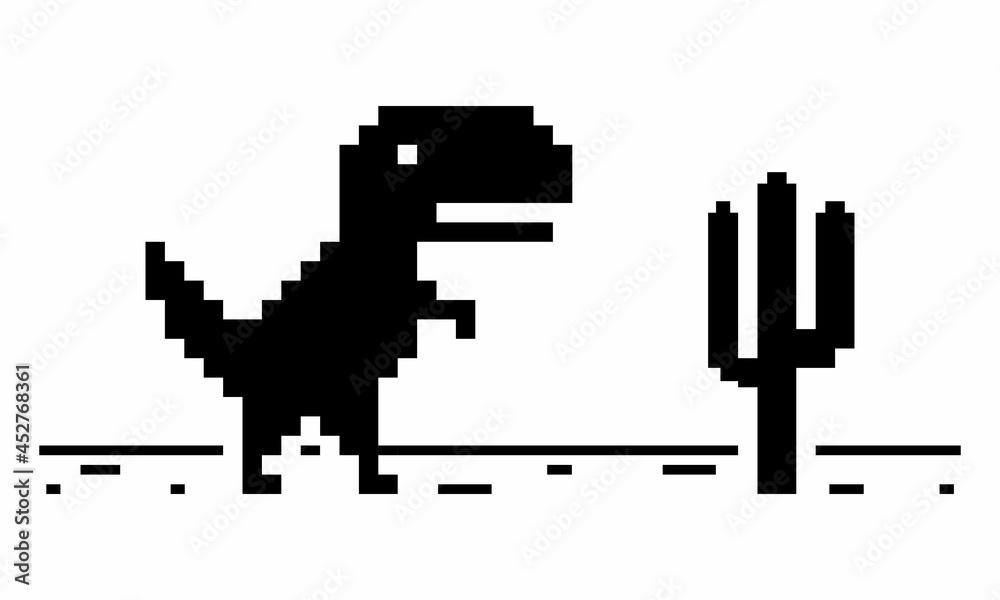
It’s a quiet day. You’re browsing the internet, chasing information, entertainment, or maybe just procrastination. Then, without warning — your connection drops. A blank white page appears, and in the center, a tiny pixelated Tyrannosaurus rex stands alone in a desert. This is Dinosaur Game, Google Chrome’s built-in endless runner, quietly waiting to turn your frustration into a strangely addictive adventure.
Born as an offline Easter egg, Dinosaur Game has become more than a time-killer. It’s an icon of internet culture, a minimalist masterpiece in distraction. And yet, it’s also one of the purest gaming experiences you’ll ever have: no menus, no story, no microtransactions — just you, a dinosaur, and the unforgiving desert ahead.
A Game You Don’t Choose — It Finds You
Unlike most games, you don’t open Dinosaur Game by scrolling through a store or tapping an app icon. It appears when the world lets you down — when your Wi-Fi decides to vanish at the worst possible moment. And that’s part of the charm. Instead of cursing at your router, you press the space bar and suddenly you’re sprinting through a prehistoric wasteland.
The premise is as simple as it gets: your T-rex runs automatically, and all you can do is jump or duck to avoid obstacles. At first, it’s just small cacti. Then come the larger cacti. Then — without warning — pterodactyls swoop in, forcing you to duck or leap at just the right moment. The longer you run, the faster the pace. And in Dinosaur Game, speed is the real predator.
Minimalism at Its Finest
Graphically, the game is stripped to the bone — monochrome sprites against a flat background. No flashy effects, no distracting details. But that’s the genius of it: you instantly understand the stakes, and every pixel serves a purpose. The art style feels like a nostalgic nod to the early days of gaming, when simplicity was not a limitation but a design choice.
The soundtrack? There is none — except for the crisp tap of the space bar and the satisfying little “bump” sound when you jump. The silence leaves room for your focus and, perhaps, your frustration.
The Curve of Difficulty
Dinosaur Game starts off slow, almost deceptively easy. You hop over a cactus or two and think, How hard can this be? But the speed creeps up, the ground scrolls faster, and suddenly your reflexes are tested in ways you didn’t expect. Your hands tense, your eyes widen, and your brain locks into a single goal: survive.
And then you crash. Maybe you jumped too early. Maybe you hesitated a fraction of a second. Either way, your run ends instantly, and your score freezes on the screen. You press space again. This time will be different.
That’s the loop that makes Dinosaur Game dangerously addictive — short bursts of gameplay, immediate restarts, and the tantalizing possibility of beating your high score.
The Hidden Second Half
For most players, Dinosaur Game is a brief diversion during downtime. But those who stick with it discover something curious: when your score reaches 700 points, the game switches to night mode. The white background darkens, stars appear, and your T-rex continues its relentless sprint in a pixelated twilight. It’s a small change, but it feels like crossing into a new chapter of the journey.
As your score climbs even higher, day and night alternate, adding a sense of time passing in this endless desert. It’s a subtle reward for perseverance — a nod from the developers saying, You’ve made it farther than most.
A Universal Experience
One of the most interesting things about Dinosaur Game is that nearly everyone with internet access has encountered it at least once. It’s played by school kids on slow classroom computers, office workers avoiding spreadsheets, travelers stuck with weak airport Wi-Fi, and gamers looking for a quick reflex challenge. It’s universal not because it’s heavily marketed, but because it’s hidden in plain sight, waiting for the right (or wrong) moment.
The game has even transcended its original browser home. Fans have recreated it in mobile apps, arcade cabinets, and even on smartwatches. Competitive players have pushed it to ridiculous extremes, chasing scores in the tens of thousands — a feat that requires nearly unblinking focus for hours.
Why We Keep Coming Back
The beauty of Dinosaur Game lies in its purity. In a gaming world crowded with sprawling narratives and complex systems, it strips the experience back to its core: survive as long as you can. Every failure teaches you something. Every new high score feels like a personal victory.
It’s not about “beating” the game — because technically, you can’t. It’s about outlasting yourself, improving bit by bit, and maybe, just maybe, reaching that mysterious point where the speed is so high you feel like you’re barely in control.
Final Sprint
Dinosaur Game is proof that great games don’t need epic stories, fancy graphics, or online connectivity. They just need to be fun — and a little bit cruel. The next time your internet cuts out, don’t sigh. Don’t grumble. Take it as an invitation from your pixelated prehistoric friend to test your reflexes and race into the endless desert.
After all, in Dinosaur Game, there’s no such thing as winning — only running, jumping, and laughing at how far you’ll go just to beat your last score.


