








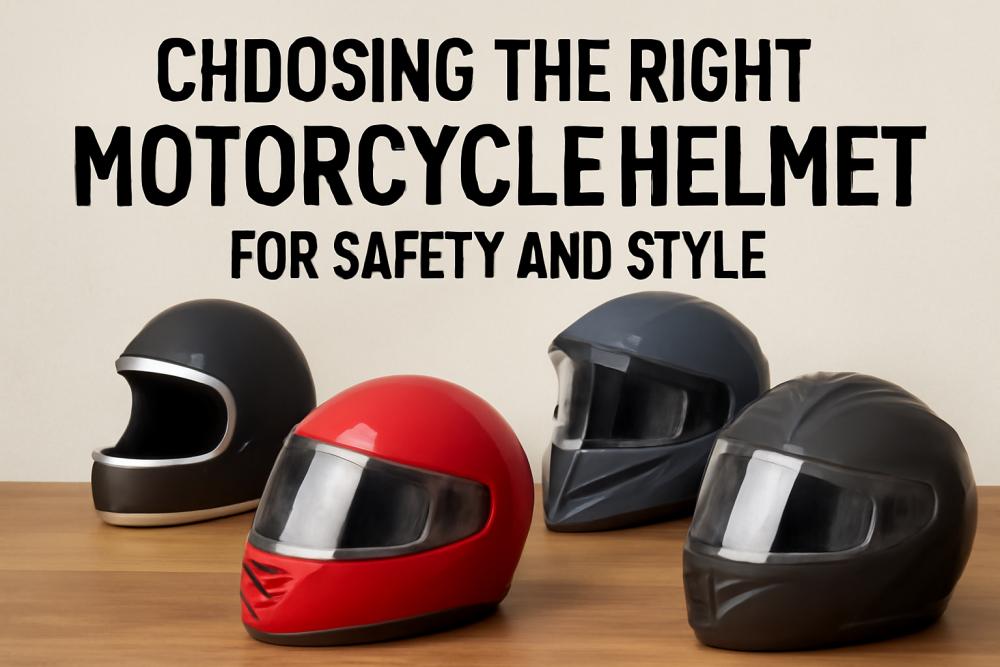
Choosing the Right Motorcycle Helmet for Safety and Style
Have you ever asked yourself, “Am I just looking slick, or am I actually safe?” Well, buckle up because when it comes to motorcycle helmet choice, style and safety go hand-in-hand like Speed control and turning power. But why should you care?. Riding without a proper motorcycle helmet isn’t just risky, it’s downright reckless. Think of this... a helmet can decrease the risk of head injury by 69% and also reduce the chance of death by about 42% for riders, with related life-saving benefits for passengers, 37% and 41% Efficiency respectively. It's not only a quality helmet, it’s game-changing.
Let’s face it, every rider dreams of looking sharp, but what good does a sleek design do if it doesn’t save your life? With countless best motorcycle helmets in the market, full-face, modular, open-face, adventure, you need the best motorcycle helmet that balances protection, comfort, and flair.
Why Helmet Choices Matter More Than Ever
You might think, “I’m just zipping around town, do I really need a full-face lid?” The short answer: absolutely. According to US data, around 24.5% of riders in 2022 didn’t use DOT-compliant helmets, and 7.4% wore non-certified lids. That’s nearly one in three! In contrast, states with universal helmet laws show helmet use rates as high as 94%, compared to 72% in states without . It’s clear that laws save lives.
A study by the Experts revealed that thousands, an estimated 22,058 riders between 1976 and 2022, could have survived had universal helmet laws been in place. That’s roughly 11% of all rider fatalities. Without a helmet? You’re playing Russian roulette at 60 mph.
Helmet use also climbed in recent years: in 2023, DOT-certified helmet use reached an all-time high of 73.8%, up from 66.5% in 2022. But that still leaves a staggering 26% of riders unprotected. Don’t be part of that statistic.
What DOT, ECE 22.06, and Snell Really Mean
So... you have settled on to a motorcycle helmet, but which certification matters most?
- DOT (Department of Transportation): Mandatory in the U.S.; it's the bare minimum.
- ECE 22.06: Europe’s stricter standard launched in July 2023, featuring angled-impact testing and multiple hit zones for a more realistic crash simulation.
- Snell M2020: A voluntary yet rigorous test suite, though some experts argue it's overly focused on hard impact and may not fully represent real-world crashes.
Experts agree: Goals for a helmet certified at least to DOT, ideally ECE 22.06 or Snell for added protection. And remember, whether it's a sleek motorcycle helmet or the ultimate best motorcycle helmet, certification matters.
Types of Motorcycle Helmets:
From sleek full-face shells to open-face classics, here’s a rundown of top helmet styles:
- Full-Face – The gold standard for impact protection, covering the chin and face. Brands like Renegade Classics are excellent examples of comfort, safety, and aerodynamic design.
- Modular (Flip-Front) – The best of both worlds: flip-up convenience with full-face protection. Models like Shoei Neotec 3 and Schuberth C5 flaunt ECE 22.06 certification and commuter-friendly versatility.
- Open-Face/Retro/Jet – Great airflow and classic appeal, but LACKS chin protection. Brands like Shoei Ex-Zero and AGV X101 deliver style, but safety-wise, no contest against full-face.
- Adventure/Dual-Sport – With a peak for sun and room for goggles, adventure helmets like Arai Tour‑X5 excel off-road and on.
In short, if safety is non-negotiable and it should be lean toward full-face or modular styles with strong certification.
Writer Review On Renegade Classics:
Reddit discussions echo this:
“Renegade Classics are top helmets for safety… then I upgraded to a 3/4 with a full face shield… decided I can overcome claustrophobic feelings for the sake of safety”
Why Helmet Fit Matters
A helmet that doesn't fit might as well be decorative. Fit is the heart of safety. A tight cheek fit, snug crown, no pressure points, and plenty of ventilation are musts. Try before buying or choose brands whose sizing you already know. Look for features like removable liners, anti-fog visors, sun visors, and aerodynamic shapes.
Advanced Features Worth the Money
Going beyond basics? Here are some game-changers:
- MIPS or EPP liners: Reduce rotational forces inside the helmet.
- Built-in comm systems: Sena, Cardo options are great for rides, but ensure they don't compromise safety.
- Smart helmets: The upcoming AGV x GoPro collaboration will embed cameras and sensors directly into helmets, integrated, aerodynamic, and less risky in crashes than aftermarket mounts.
Maintaining Your Helmet: A Lifespan Checklist
A helmet’s protective power fades over time. Replace it after a crash or every 5 years—even if it looks fine. Clean the liner, visor, and vents regularly with mild soap—never harsh chemicals. Store away from sunlight and heat. Swap visors at signs of wear or scratches that reduce visibility.
State Helmet Laws: Know the Rules Where You Ride
Did you know? Only 17 U.S. states plus DC require helmets for all riders; others exempt adults. Without universal laws, helmet use drops, leading to preventable deaths. In places like Pakistan, such laws may differ, but the science is universal: a motorcycle helmet saves lives wherever you ride.
Your Ultimate Helmet-Buying Ride Checklist
By now, you’ve got your head spinning—but here’s the wrap-up:
- Choose full-face or modular—don’t compromise chin protection.
- Prioritize certification—DOT is minimum; aim for ECE 22.06 or Snell.
- Try the helmet—fit is king. Culture out pressure points, confirm snug fit.
- Budget wisely—a good helmet ranges from $200 to $700+, smart helmets cost more, but they're pricier for good reason.
- Commit to replacement—post-crash or every five years regardless.
In Conclusion:
You started asking, “Should I go full-face or open-face?” or “Is that fancy lightweight carbon worth it?”. Now you are motivated with review: the best motorcycle helmet is one that protects you, fits like a glove, and fits your style and budget.
Remember it, "41% of riders in fatal crashes were not wearing helmets". Wear one, and your odds of surviving a crash drop dramatically. It’s not only about good appearance, it’s about riding another day to tell your tales.
So… gear up smartly—pick that certified, well-fitted motorcycle helmet, ride hard, ride safe, and show the world that safety and style are the ultimate duo.


