








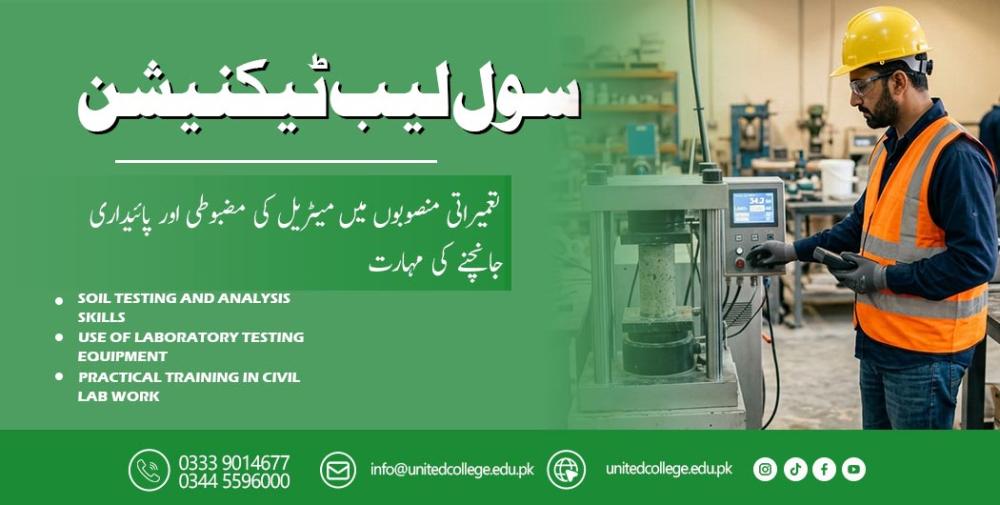
Civil Lab Technician Jobs in Gulf Countries: Skills You Need

The construction industry in Gulf countries continues to involve major building, road, and infrastructure projects. These projects require engineers, site supervisors, quality control teams, and laboratory technicians who can help check the quality of construction materials.
A Civil Lab Technician plays an important role in this work. The job involves testing materials such as cement, concrete, soil, aggregates, and asphalt. Technicians collect samples, operate testing equipment, record results, and help engineers understand whether materials meet project requirements.
If you are interested in Civil Lab Technician jobs in Gulf countries, having a course certificate is only one part of your preparation. Employers also look for practical knowledge, accurate testing, safety awareness, and the ability to work with technical teams.
Let's explore the important skills that can help you prepare for this field.
Understand Construction Material Testing
One of the most important skills is understanding construction materials and their testing procedures.
Civil Lab Technicians commonly work with concrete, cement, soil, and aggregates. Some infrastructure projects also require asphalt testing. Each material has different properties and testing methods.
For example, concrete testing helps check the properties and strength of concrete used in construction. Soil testing provides information about ground conditions, while aggregate testing examines materials used in concrete and road construction.
You should understand why each test is performed, how samples are prepared, and why following the correct procedure matters.
Learn Concrete Testing Procedures
Concrete testing is an important part of construction quality control. Technicians may collect fresh concrete samples, perform slump tests, check temperature, prepare concrete cubes or cylinders, and record compressive strength results.
You should understand the purpose of these tests and how the results are documented.
For example, a slump test helps assess the consistency and workability of fresh concrete. Compressive strength testing helps determine how much load a concrete specimen can withstand under the specified testing conditions.
Employers may expect practical experience with testing equipment and sample preparation. Therefore, learning the theory is useful, but supervised practical training is equally important.
Develop Soil and Aggregate Testing Skills
Soil testing is another important area in civil laboratory work. It helps engineers understand soil properties and whether ground materials meet the requirements of a particular project.
Technicians may work with moisture content testing, particle size distribution, Atterberg limits, compaction testing, and field density testing.
Aggregate testing is also useful because aggregates are widely used in concrete and road construction. Common procedures include sieve analysis, grading, specific gravity, and water absorption testing.
Recent UAE job descriptions for infrastructure laboratory technicians mention several of these procedures, including soil compaction, field density, concrete testing, and aggregate testing. <Cite refs={["turn869872search0","turn869872search3"]}/>
Understanding these methods can help you prepare for the technical responsibilities described in Gulf job advertisements.
Understand ASTM, AASHTO, BS, and EN Standards
Knowledge of testing standards is another useful skill for Civil Lab Technicians.
Construction companies and testing laboratories use recognised standards and project specifications to guide their testing procedures. Some job advertisements mention ASTM, AASHTO, British Standards (BS), and European Standards (EN).
You do not need to memorise every standard before starting your learning journey. However, you should understand why standards are used and how technicians follow approved testing methods.
For example, a laboratory may require a particular procedure for preparing a concrete specimen or checking soil compaction. Following the approved method helps maintain consistency and reliable results.
A recent UAE recruitment listing specifically mentions familiarity with ASTM, AASHTO, BS, and EN requirements. <Cite refs={["turn869872search2","turn869872search8"]}/>
Learn to Use Laboratory Equipment
A Civil Lab Technician should understand how common laboratory equipment is used and maintained.
Depending on the workplace, equipment may include concrete compression testing machines, weighing balances, sieves, ovens, compaction equipment, slump cones, and soil testing apparatus.
You should learn the purpose of each instrument and follow the manufacturer's instructions and laboratory procedures.
Equipment condition also matters. Technicians may be responsible for routine checks, cleaning, maintenance records, and reporting equipment problems to supervisors.
Never operate unfamiliar machinery without suitable training and supervision. Safe and correct equipment handling is an important part of professional laboratory work.
Improve Report Writing and Record-Keeping
Testing is not complete when a laboratory procedure finishes. The results also need to be recorded properly.
A technician may need to document sample identification, collection dates, testing conditions, measurements, and final observations. These records help engineers and quality control teams review material performance.
Practise writing clear and organised reports. You should also develop basic computer skills, especially for preparing documents and maintaining spreadsheets.
Accuracy is essential. A small recording mistake can create confusion when a project team reviews testing information.
Understand Quality Control and Quality Assurance
Quality control and quality assurance are closely connected with construction material testing.
Quality control involves checking materials and work against the required specifications. Quality assurance focuses on the procedures and systems used to maintain consistent quality.
A Civil Lab Technician may support QA/QC engineers by carrying out tests, maintaining records, and reporting results that do not meet project requirements.
You should understand why technicians must report unusual or non-compliant results honestly. Changing or hiding test results can affect project decisions and construction quality.
Develop Workplace Safety Awareness
Laboratory and construction-site environments have different safety requirements. Technicians may handle heavy samples, work around equipment, and visit active project sites.
Understanding workplace safety procedures is therefore important.
Learn about personal protective equipment, laboratory housekeeping, safe sample handling, and following site instructions. You should also understand the importance of reporting unsafe conditions to the responsible supervisor.
Employers value technicians who follow safety rules and understand their responsibilities.
Improve Communication and Teamwork
Civil Lab Technicians often work with laboratory supervisors, civil engineers, QA/QC engineers, site inspectors, and construction teams.
Good communication helps everyone understand testing requirements and results. You should be able to explain what test you performed, record the findings clearly, and ask questions when instructions are unclear.
Basic English communication can also be useful in international workplaces where employees come from different countries.
You do not need perfect English to begin improving. Practise common technical terms and learn to explain your laboratory activities in simple, clear sentences.
Does Gulf Experience Matter?
Some Gulf employers prefer candidates who have previous experience in construction material testing. Others may consider applicants with less experience for assistant or junior positions.
For example, a 2026 Abu Dhabi recruitment listing for a Civil Lab Technician described a preference for one to two years of relevant experience. Another Qatar listing for an Assistant Technician – Materials Testing stated that candidates without previous experience could be considered.
These examples show that requirements vary between employers and job levels. <Cite refs={["turn869872search1","turn869872search5"]}/>
If you are a fresh candidate, focus on building practical skills and understanding the testing procedures covered in your training. Do not claim professional experience you do not have.
How to Prepare Before Applying for Gulf Jobs
Start by reviewing the technical subjects you studied during your Civil Lab Technician course. Pay special attention to concrete, soil, aggregate, and asphalt testing where these subjects are part of your syllabus.
Try to gain supervised practical experience and understand how laboratory records are maintained. Improve your computer skills and practise explaining common testing procedures.
Your CV should clearly describe your education, training, practical activities, and genuine work experience. Employers should be able to understand what you can actually do.
Also, read each job advertisement carefully. Some positions require a civil engineering diploma or degree, while others may accept relevant technical qualifications and practical training.
Civil Lab Technician Training at UCT Islamabad
If you want to build a foundation in construction material testing, United College of Technology (UCT) lists a Civil Lab Technician course at its Islamabad campus.
Its published course information gives a duration of three months and a fee of PKR 45,000, with morning and evening class options. The programme introduces students to cement, concrete, soil, and aggregate testing, along with practical learning.
You can review the Civil Lab Technician Course in Islamabad at UCT for further details.
Before admission, confirm the latest fee, syllabus, practical training arrangements, class schedule, and certificate conditions directly with the institute.
Remember that a short course can introduce you to the field, but it does not automatically meet every Gulf employer's qualification or experience requirements.
Frequently Asked Questions
1. Which skills are required for Civil Lab Technician jobs in Gulf countries?
Employers commonly look for construction material testing knowledge, equipment handling, accurate record-keeping, testing standards, workplace safety, and communication skills.
2. Is concrete testing important for Gulf jobs?
Yes. Concrete testing is frequently mentioned in construction laboratory job descriptions. Knowledge of slump testing, sample preparation, and compressive strength testing can be useful.
3. Do Gulf employers require ASTM knowledge?
Some employers specifically mention ASTM, AASHTO, BS, or EN standards. Requirements vary, so read each job advertisement carefully.
4. Can fresh candidates apply for Gulf Civil Lab Technician jobs?
Some assistant or junior positions may consider fresh candidates, while other employers require relevant experience. Check the qualification and experience requirements before applying.
5. Is a Civil Lab Technician course certificate enough to get a Gulf job?
Not always. Employers may also require a diploma or degree, practical experience, technical knowledge, and the ability to perform specific testing procedures.
6. Which materials should I learn to test?
Start with cement, concrete, soil, and aggregates. Asphalt testing can also be useful, especially for road and infrastructure projects.
Build Skills That Match Industry Requirements
Civil Lab Technician jobs in Gulf countries require more than basic knowledge of construction materials. Practical testing, equipment handling, recognised testing procedures, accurate reporting, and workplace safety all matter.
Start by strengthening your understanding of concrete, soil, and aggregate testing. Continue improving your practical ability and communication skills, and check employer requirements before applying.
A clear learning plan and honest understanding of your abilities can help you prepare for suitable opportunities in the construction material testing field.


